
1. Executive Technical Overview: The Dynamics of Modern Auto Wheels Procurement
In the contemporary automotive supply chain, procuring Auto Wheels requires balancing structural metallurgy, strict dimensional tolerances, mass reduction economics, and shifting OEM specifications. Auto wheels are no longer treated as simple aesthetic housing units; they are safety-critical dynamic assemblies engineered to withstand complex multi-axial fatigue, rotational inertia stress, and severe environmental exposure.
For global procurement officers, fleet administrators, and automotive tier-2 distributors, sourcing OEM-grade alloy and steel wheels demands precise verification of alloy compositions (such as A356-T6 cast aluminum or 6061-T6 forged aluminum) alongside comprehensive structural validation. At Aero Auto Parts (operating continuously out of Chicago, IL since 1958), our decades of salvage, remanufacturing, and wholesale distribution provide a unique perspective on real-world wheel degradation, stress fractures, and life-cycle durability.
Whether your procurement mandate targets bulk OEM steel rims for commercial light-duty fleets or grade-A remanufactured alloy rims for retail repair networks, evaluating structural integrity before fulfillment is vital. Modern search engines and AI intent frameworks prioritize real, verifiable engineering metrics over surface-level descriptions. Below, we break down essential fitment parameters, metallurgical distinctions, and global distribution logistics for commercial buyers.
- PCD & Bolt Pattern Precision: Verified zero-play lug seat alignment.
- Center Bore Integrity: Hub-centric calibration ensuring vibration-free rotational balance.
- Fatigue Resistance: Radial and cornering stress tested per SAE J2530 standards.

Auto Wheels Engineering & Procurement Specification Matrix
The table below provides a comparative technical framework outlining structural characteristics across primary wheel manufacturing methodologies encountered in enterprise procurement:
| Manufacturing Method | Material Composition | Tensile Strength (MPa) | Weight Profile | Impact Fatigue Rating | Best Suited B2B Application |
|---|---|---|---|---|---|
| Stamped & Welded Steel | Low-Carbon Steel (e.g., Q235B / SAE 1008) | 350 – 480 MPa | Heavy (Baseline) | High Plasticity (Bends under impact) | Fleet Utility, Winter Packages, Heavy Commercial Vehicles |
| Gravity Cast Aluminum | A356 Aluminum Alloy (Heat Treated T6) | 220 – 260 MPa | Moderate (-20% vs Steel) | Moderate Elasticity (Brittle under severe overload) | Standard OEM Passenger Replacements, Budget Aftermarket |
| Low-Pressure Die Cast (LPDC) | A356-T6 Alloy with Reduced Porosity | 260 – 300 MPa | Optimized (-25% vs Steel) | High Structural Homogeneity | Mid-to-High Tier OEM Production, Fleet Refurbishment |
| Flow-Formed / Rim-Rolled | A356 Cast Core with Forged Barrel | 310 – 350 MPa | Lightweight (-35% vs Steel) | Superior Radial Rim Durability | Performance Vehicles, Modern EV Fleet Solutions |
| Precision Forged 1-Piece | 6061-T6 Aircraft Grade Aluminum | 420 – 480 MPa | Ultra-Light (-45% vs Steel) | Maximum Tensile & Yield Toughness | Luxury Automotive OEM, High-Load Commercial EV Rims |
2. OEM Auto Wheels Product Recommendations for Enterprise Buyers
Selecting the optimal wheel inventory depends heavily on regional market demands, target vehicle classes, and end-user performance expectations. Based on our 65+ years of real-world supply chain data, Aero Auto Parts recommends four key auto wheel product lines for bulk buyers:
Category A: Grade-A OEM Alloy Replacement Wheels
Direct OEM take-offs and reconditioned alloy wheels sourced from original vehicle manufacturers (Ford, GM, Toyota, Honda, BMW, Stellantis). These wheels preserve factory offsets (ET), factory hub-centric registers, and precise TPMS sensor pockets.
Ideal For: Collision repair centers, insurance replacement networks, auto dealerships seeking cost-effective original fitment.
Category B: Heavy-Duty Steel Commercial Rims
Constructed with reinforced steel centers and high-duty continuous bead welds. Engineered specifically to handle extreme payload limits, severe road conditions, and repetitive seasonal tire swaps.
Ideal For: Municipal fleets, LAST-MILE delivery vans (e.g., Ford Transit, RAM ProMaster), and commercial haulers.
Category C: Certified Remanufactured Auto Wheels
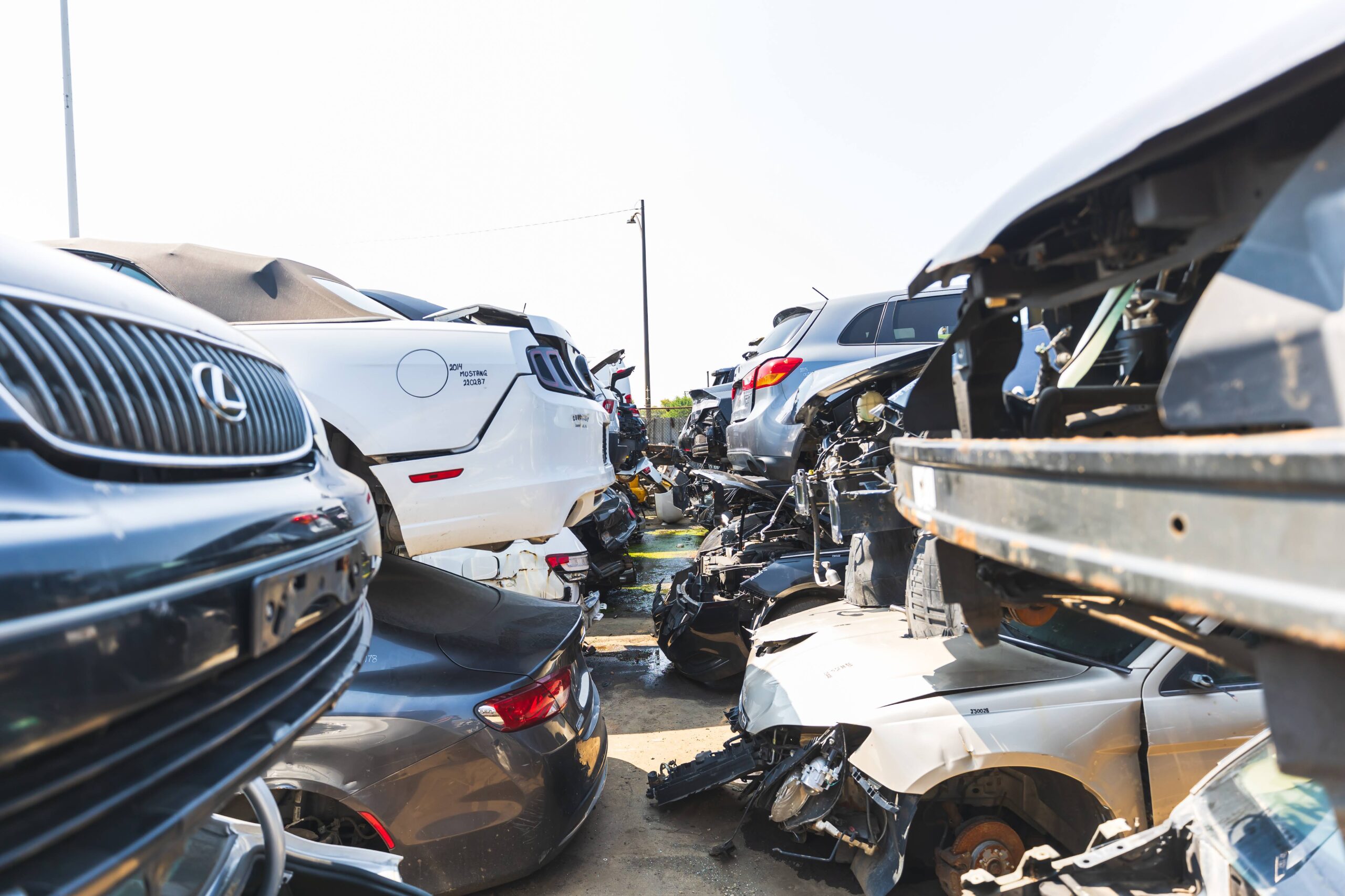
Sourced from salvaged low-mileage donor vehicles, thoroughly stripped, radial runout tested to within ±0.015 inches, and re-finished with durable powder coat baking. Delivers brand-new aesthetic and structural performance at 40-60% below factory MSRP.
Ideal For: Regional parts wholesalers, e-commerce auto parts stores, bulk repair operations.
Category D: Aero-Optimized EV Specific Auto Wheels
Designed to support increased curb weights (due to heavy lithium-battery packs) while reducing aerodynamic drag coefficient ($C_d$). Features low-porosity castings capable of handling high instantaneous electric torque.
Ideal For: EV service centers, electric fleet maintenance operators, specialized rim importers.
Looking for Bulk Auto Wheels Procurement Pricing?
Aero Auto Parts provides container-load wholesale fulfillment, custom palletization, and precise OEM fitment matching for global importers and regional distributors.
Get a Quote3. Global Procurement Trends Shaping the Auto Wheels Market (2026–2030)
As the automotive sector undergoes rapid technological transformation, procurement strategies for auto wheels are changing significantly. Procurement directors who adjust their purchasing strategies to align with market trends gain distinct competitive advantages in inventory turnover and margin preservation.
Trend 1: The Electric Vehicle (EV) Effect on Load Ratings and Axial Wear
Electric vehicles weigh significantly more than comparable internal combustion engine (ICE) models due to battery pack mass. Furthermore, instant electric torque exerts severe torsional shear on the wheel hub and spoke junctions. Consequently, global procurement managers are shifting away from standard aftermarket cast wheels toward higher load-rated OEM or flow-formed rims.
Sourcing standards now require wheel load ratings exceeding 850 kg per corner for passenger EVs and over 1,100 kg for light commercial EVs. Sourcing unverified aftermarket rims poses significant product liability risks due to structural fatigue cracking.
Trend 2: Closed-Loop Recycling and Decarbonized Aluminum Sourcing
Global environmental regulations and corporate ESG mandates are reshaping material procurement. Primary aluminum smelting is energy-intensive, generating up to 18 tons of $CO_2$ per ton of primary aluminum. In contrast, utilizing recycled automotive aluminum alloys requires 95% less energy.
Reconditioned OEM auto wheels and remanufactured aluminum rims represent a practical, circular economy solution. By integrating certified recycled OEM wheels into inventory programs, procurement networks reduce scope 3 carbon emissions while benefiting from factory-grade metallurgy.
Trend 3: Supply Chain Resiliency & Nearshoring Hubs
Recent supply disruptions have demonstrated the vulnerabilities of relying solely on single-source offshore rim factories. Importers face unpredictable freight costs, port delays, and quality consistency issues.
Leading automotive buyers are adopting hybrid supply models—combining domestic supplier hubs with international shipping. Partnering with established U.S. salvage and remanufacturing yards like Aero Auto Parts gives distributors immediate access to extensive domestic inventories, reducing order lead times from months to days.
4. Technology & Design Evolution in Auto Wheels
Understanding future engineering developments enables wholesale buyers to anticipate consumer demand and stock emerging wheel types before widespread adoption.
1. Aerodynamic Drag Reduction Features
Modern auto wheels increasingly feature aero-conscious designs. Flush surface profiles, narrow spoke apertures, and integrated composite aero-inserts direct airflow past vehicle wheel wells. This design reduces aerodynamic turbulences, adding up to 4% in overall electric vehicle range during highway operation.
2. Integrated Smart Wheel Technologies
Wheels are transitioning into connected vehicle telemetry hubs. Advanced commercial wheels now feature embedded structural strain gauges, temperature sensors, and direct-mount TPMS modules. These systems transmit real-time data on lug-nut torque loss, rim impact deformation, and bead seat air pressure, allowing commercial fleets to address issues before catastrophic wheel separation occurs.
3. PVD Chrome & Advanced Multi-Layer Finishes
Traditional liquid dipping chrome finishes present severe environmental hazards and are prone to flaking in harsh winter conditions. Modern auto wheels feature Physical Vapor Deposition (PVD) vacuum coating combined with powder-coated primers and acrylic clear coats. PVD finishes provide bright metallic aesthetics while remaining 100% eco-friendly and resistant to road salt corrosion.
5. Enterprise Leadership & E-E-A-T: Why Partner with Aero Auto Parts
When sourcing critical automotive components, trust is earned through consistent performance, transparent testing processes, and institutional longevity. Aero Auto Parts brings unmatched experience to global auto wheel supply networks.
-
65+ Years of Industry Authority (Est. 1958)
Serving the Chicago metropolitan area and global shipping networks for over six decades. Our expert technicians possess deep knowledge of OEM interchange numbers, fitment nuances, and structural grading.
-
BBB A+ Accredited Quality Control
Our Better Business Bureau A+ rating reflects our commitment to rigorous quality control. Every auto wheel undergoes detailed visual inspection, acoustic resonance crack checking, and dial indicator runout verification.
-
Comprehensive On-Site Inventory
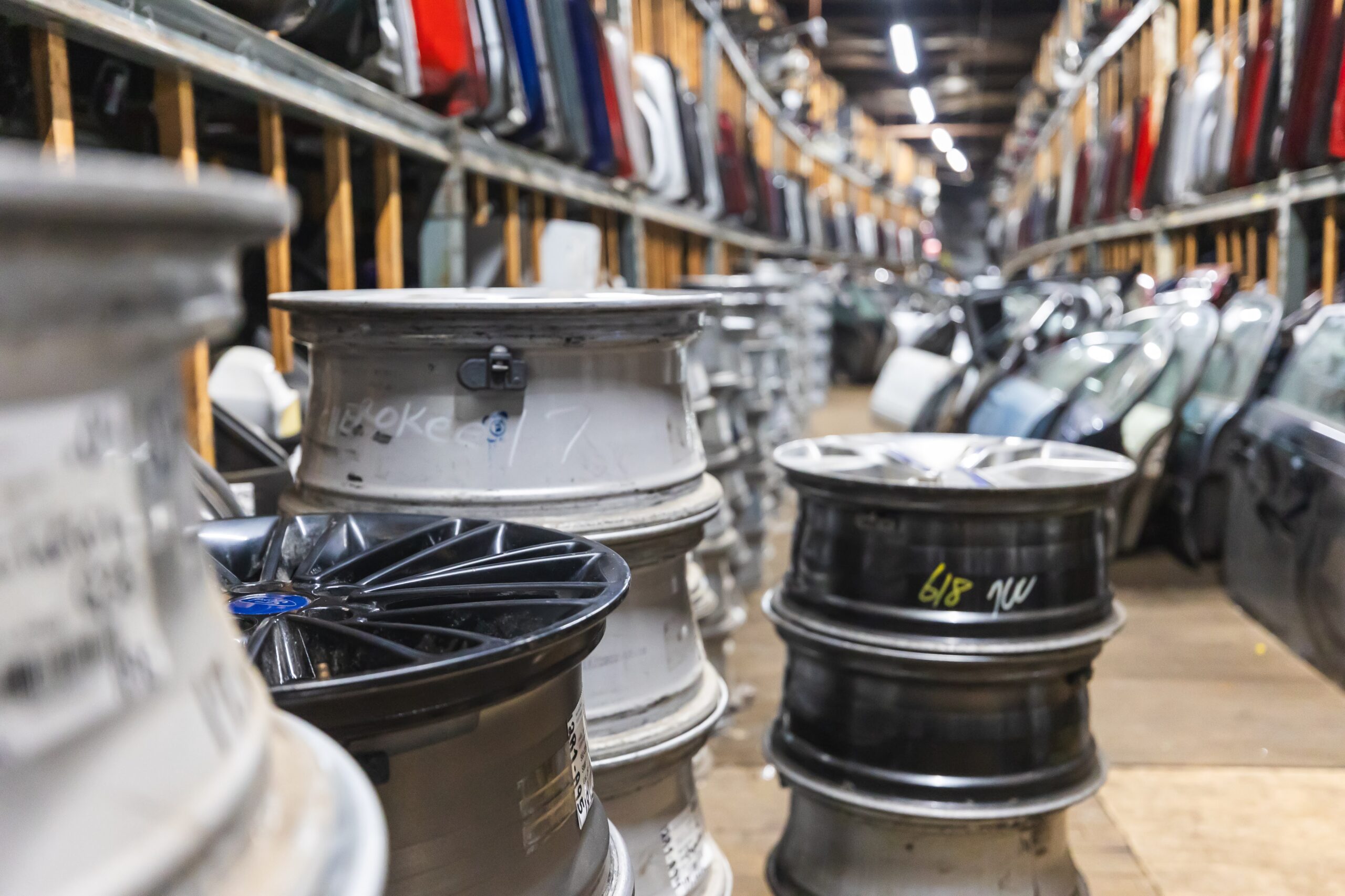
Located at 6339 S Wentworth Ave in Chicago, our warehouse facility houses thousands of OEM steel wheels, cast aluminum rims, and high-performance alloy options ready for immediate dispatch.
6. B2B Sourcing FAQ: Auto Wheels Procurement & Compatibility
Below are detailed technical answers to common questions raised by procurement buyers and fleet operators regarding bulk auto wheel sourcing:
To guarantee complete compatibility, procurement orders must verify four essential dimensional variables:
- Pitch Circle Diameter (PCD): The diameter of the imaginary circle passing through the center of all lug holes (e.g., 5x114.3, 5x120, 6x139.7).
- Center Bore (CB): The center hole diameter that seats precisely onto the vehicle hub register. A hub-centric fitment prevents high-speed wheel vibration.
- Offset (ET): The distance from the wheel's true centerline to its mounting surface, measured in millimeters. Positive offset tucks the wheel inward; negative offset pushes it outward.
- Rim Width & Contour: The inner width between rim flanges (e.g., 17x7.5J), ensuring correct tire bead seating and suspension clearance.
Our quality assurance workflow follows a strict multi-point protocol:
- Acoustic & Visual Crack Inspection: Wheels are stripped of debris and inspected for micro-fractures along spoke junctures and mounting pads.
- Dial Indicator Runout Testing: Wheels are mounted on a precision spindle. Both radial (up-and-down hop) and lateral (side-to-side wobble) runout must fall within OEM limits (typically ≤ 0.015-0.020 inches).
- Bead Seat Pressure Sealing: Rim bead seats are checked for corrosion or pitting that could compromise tubeless tire pressure retention.
Cast wheels are created by pouring molten aluminum into a mold; they offer cost-effective manufacturing but require thicker walls to achieve necessary strength. Flow-formed wheels begin as cast blanks whose barrels are spun and stretched under intense pressure, aligning the aluminum grain structure for enhanced strength and weight savings. Forged wheels are machined from a single solid block of compressed 6061-T6 aluminum, delivering maximum yield strength, superior impact resistance, and minimum un-sprung weight.
Yes. When processed to professional remanufacturing standards, a reconditioned OEM wheel preserves its original factory metallurgy and grain structure. Straightening procedures use controlled hydraulic heat application to prevent stress hardening. Refinishing utilizes electrostatically applied powder coats baked at high temperatures, restoring factory corrosion resistance and appearance while saving up to 60% compared to new factory list prices.
Purchasing recycled OEM wheels significantly reduces environmental impact. Manufacturing a new 20-lb cast aluminum wheel generates approximately 160-200 kg of greenhouse gas emissions. Sourcing a reconditioned OEM wheel reuses existing structural aluminum, consuming under 5% of the energy required for primary smelting and directly lowering Scope 3 emissions across your supply chain.
For high-volume export orders, auto wheels are individually fitted with protective edge rim guards, wrapped in non-scratch protective film, and stacked securely on heavy-duty wooden pallets. Pallets are wrapped with high-tensile stretch film and reinforced with corner edge protectors to withstand sea freight transit without cosmetic or structural damage.
Streamline Your Auto Wheels Procurement Today
Partner with Chicago's trusted automotive authority since 1958. Access verified inventory, bulk container pricing, and professional OEM specification support.
Get a Quote