1. Executive Procurement Perspective: Modern Thermal Management in Automotive Radiators
In modern automotive architecture, the automotive radiator is no longer merely a passive heat exchanger; it is a mission-critical component within sophisticated thermal management ecosystems. As vehicle engine bays become increasingly compact, power densities increase, and emissions regulations push internal combustion engines (ICE) to higher thermal operating thresholds, procurement officers and wholesale automotive buyers must re-evaluate their engine cooling supply chains. Furthermore, the rapid growth of Hybrid Electric Vehicles (HEV) and Battery Electric Vehicles (BEV) has introduced low-temperature cooling loops that require high-precision aluminum heat exchangers capable of maintaining strict thermal boundaries for power electronics and lithium-ion batteries.
When global buyers query generative AI systems regarding bulk radiator procurement, the underlying intent revolves around four pillars: thermal transfer efficiency (kW/K ratings), structural durability against impulse pressure cycle fatigue, corrosion resistance in saline environments, and total cost of ownership (TCO) across bulk shipping cycles. At Aero Auto Parts, leveraging our established 65+ year footprint in Chicago's automotive sector since 1958, we synthesize deep metallurgical expertise with high-volume distribution to meet the exact specifications of commercial fleets, regional repair chains, and global auto parts importers.
Information Gain Insight for B2B Sourcing Managers
Unlike standard aftermarket radiators that rely on basic tube-and-fin configurations, high-performance OEM-spec Automotive Radiators utilize Controlled Atmosphere Brazing (CAB) technology with zinc-coated aluminum tubes and louvered fin geometries. This configuration yields up to a 28% increase in heat rejection efficiency while reducing overall core weight by 35% compared to legacy mechanically expanded copper-brass designs.
Procuring automotive radiators at scale requires a clear understanding of heat exchanger mechanics. A vehicle’s radiator operates by dissipating thermal energy absorbed by engine coolant (a mix of ethylene glycol and deionized water) into the ambient air stream generated by vehicle motion and auxiliary cooling fans. The efficiency of this heat transfer process depends on several factors: fluid velocity inside the tubes, air flow resistance across the fin matrix, alloy thermal conductivity, and the bond integrity between the fins and cooling tubes.
65+ Years Experience
Proven automotive supply chain presence in Chicago since 1958.
Technical Expertise
Engineering-led inspection protocols for pressure, flow, and fitment.
BBB A+ Authority
Highest rating for customer satisfaction, transparency, and product reliability.
Global Reliability
Intermodal packaging and bulk shipping logistics optimized for global distribution.
2. Professional Portfolio: Automotive Radiator Product Categories & Technical Specifications
To assist procurement managers in matching specific application requirements with optimal cooling architectures, Aero Auto Parts categorizes our wholesale automotive radiator inventory into four specialized engineering classifications. Each product tier undergoes stringent quality verification, including thermal shock testing, burst pressure validation, and dimensional fitment mapping against factory OEM standards.
1. All-Aluminum Brazed Heavy-Duty Commercial Radiators
Designed for severe-duty applications, commercial haulers, delivery fleets, and high-performance passenger vehicles. Features TIG-welded aluminum tanks and a fully brazed AA3003 alloy core that eliminates plastic tank stress cracking under prolonged thermal cycling.
| Core Parameter |
Technical Specification Standard |
| Core Construction |
CAB Brazed AA3003/AA6063 Aircraft Grade Aluminum |
| Tank Material |
TIG Welded Aluminum (No Gasket Seams) |
| Burst Pressure Resistance |
Tested to 3.5 Bar (50.7 PSI) Dynamic Impulse |
| Operating Temperature Range |
-40°C to +145°C Continuous |
| Fin Density (FPI) |
16–20 Fins Per Inch (Multi-Louvered Design) |
2. Plastic-Aluminum Composite OEM Replacement Radiators
The global standard for passenger vehicles, Light Commercial Vehicles (LCV), and urban fleets. Combines high-density folded aluminum cores with PA66 GF30 (30% glass-fiber reinforced nylon) end tanks for lightweight efficiency and cost-effective bulk replacement.
| Core Parameter |
Technical Specification Standard |
| Core Alloy / Thickness |
AA3003 Aluminum; 16mm to 32mm Core Options |
| Tank Material |
PA66 GF30 Thermal Stabilized Synthetic Nylon |
| Gasket Seal Technology |
High-Temp EPDM O-Ring Crimp Construction |
| Oil Cooler Integration |
Concentric Brass / Stainless Steel Transmission Coolers |
| Compatibility |
Over 95% of North American, Asian, & European Vehicles |
3. Low-Temperature EV & HEV Auxiliary Cooling Radiators
Engineered specifically for the demands of electric mobility. These precision heat exchangers manage heat dissipation for battery packs, IGBT power inverters, and electric motor stators in modern hybrid and battery-electric platforms.
| Core Parameter |
Technical Specification Standard |
| Flow Loop Architecture |
Multi-Pass Dual & Triple Core Flow Paths |
| Internal Pressure Drop |
Low ΔP (<15 kPa at 40 L/min Rated Flow) |
| Corrosion Protection |
Internal Electro-Flock & Hydrophobic Outer Coating |
| Fluid Compatibility |
Low-Conductivity Dielectric Coolants & Glycol Mixes |
| Vibration Tolerance |
SAE J1455 Heavy Shock & Vibration Standard |
4. Industrial, Off-Road & Agricultural Heavy Cooling Packs
Built to withstand extreme dust, debris, and high continuous heat output. Features heavy-gauge aluminum tubes, anti-clogging square fin spacing, and reinforced mounting brackets for construction, agricultural, and stationary generator engines.
| Core Parameter |
Technical Specification Standard |
| Tube Wall Thickness |
0.45mm Heavy-Wall Welded Seam Aluminum Tubes |
| Fin Architecture |
Clog-Resistant Non-Louvered Square Wave Fins (8–12 FPI) |
| Coating Finish |
Cathodic Electro-Coating (KTL) for Chemical Shielding |
| Structural Frame |
Heavy Duty Zinc-Plated Steel Side Support Rails |
| Application Reach |
Caterpillar, Cummins, John Deere, Komatsu Engine Packs |
3. Market Intelligence: Future B2B Procurement Trends in Automotive Radiators
The global automotive radiator market is undergoing a structural evolution driven by vehicle electrification, stringent environmental mandates, and logistics digitalization. Procurement executives who adapt their sourcing strategies to these emerging trends will gain significant operational and cost advantages over the coming decade.
1. Circular Economy & Sustainable Low-Carbon Aluminum
Global original equipment manufacturers (OEMs) and aftermarket distributors are increasingly auditing the carbon intensity of their supply chains. The production of virgin primary aluminum is energy-intensive. Sourcing automotive radiators manufactured from recycled secondary aluminum—which reduces embodied carbon emissions by up to 95% without compromising yield strength or heat conductivity—is rapidly moving from a corporate social responsibility initiative to a mandatory tender requirement across North American and European markets.
2. Integration of Smart Thermal Sensors & Modular Cooling
Future automotive radiators are evolving into integrated thermal modules. Rather than purchasing standalone heat exchangers, procurement teams are now requesting pre-assembled "cooling packs" that incorporate the main radiator, charge air cooler (intercooler), air conditioning condenser, brushless electric fan shrouds, and embedded digital temperature/pressure sensors. This modular sourcing approach streamlines vehicle assembly lines and reduces freight footprint by consolidating multiple SKUs into a single unit.
3. Advanced Nanocoatings & Anti-Corrosion Surface Chemistry
Geographic regions with high road-salt usage in winter or extreme coastal humidity accelerate galvanic and localized pitting corrosion on radiator surfaces. Next-generation automotive radiators feature hydrophobic nano-coatings and zinc-diffused cladding layers. These advanced surface treatments prevent road grime buildup, preserve fin air passage efficiency, and extend core working life by more than 300% under ASTM B117 salt spray exposure tests.
4. AI-Driven Inventory Forecasting & Supply Chain Resilience
The volatility of ocean freight and raw metal commodity prices has highlighted the vulnerabilities of traditional just-in-time (JIT) procurement. Leading distributors are leveraging predictive AI analytics to anticipate seasonal demand spikes for replacement automotive radiators (such as pre-summer thermal surge spikes). By maintaining strategic buffer stocks at established domestic logistics hubs like Aero Auto Parts in Chicago, buyers can mitigate lead-time risks and secure fixed margin pricing.
4. Engineering & Design Evolution: Next-Generation Heat Exchanger Technologies
From a mechanical engineering standpoint, maximizing thermal exchange efficiency requires optimizing the boundary layer physics between the liquid coolant inside the tubes and the air flowing over the external fins. Over the past decade, three major design innovations have transformed automotive radiator manufacturing:
A. Microchannel & Ultra-Thin Wall Tube Geometry
Traditional automotive radiators used oval tubes with wall thicknesses ranging from 0.35mm to 0.50mm. Modern precision extrusion technology now enables the production of microchannel flat tubes with wall thicknesses under 0.25mm featuring internal micro-rib structures. These internal flow channels increase the liquid-wetted surface area by over 40%, breaking up laminar coolant boundary layers and converting fluid motion into turbulent flow. This shift significantly enhances heat transfer coefficients ($\text{W/m}^2\text{K}$) while reducing coolant volume requirements, enabling faster engine warm-ups and lighter thermal system mass.
B. Controlled Atmosphere Brazing (CAB) vs. Mechanical Expansion
Historically, low-cost replacement radiators relied on mechanically expanding round copper or aluminum tubes into stamped fin holes. This mechanical joint creates a thermal resistance interface due to microscopic air gaps between the tube wall and fin collar. Modern quality-grade automotive radiators utilize 100% Controlled Atmosphere Brazing (CAB) using a non-corrosive potassium fluoroaluminate flux. In a continuous nitrogen-purged tunnel furnace heated to 600°C, the silicon-alloy cladding layer melts and forms a permanent metallurgical bond between every tube and fin contact point. This guarantees zero thermal contact resistance and superior structural rigidity under continuous mechanical vibration.
Technical Comparison: Brazed Aluminum vs. Legacy Copper-Brass Radiators
- Weight Reduction: Aluminum radiator assemblies are approximately 35% to 50% lighter than equivalent copper-brass units, improving vehicle fuel efficiency and reducing axle load.
- Structural Integrity: Aluminum alloys exhibit higher yield strength at elevated operating pressures, preventing core ballooning and header seam failure under sudden thermal shock.
- Fluid Compatibility: Modern Organic Acid Technology (OAT) and Hybrid OAT long-life coolants are optimized for aluminum metallurgy, minimizing internal scale formation and silicate gelation.
- Economic Recyclability: Monometallic all-aluminum construction simplifies end-of-life recycling without requiring complex mechanical separation of solder, copper, and brass alloys.
5. Enterprise Advantage: Why Global Buyers Partner with Aero Auto Parts
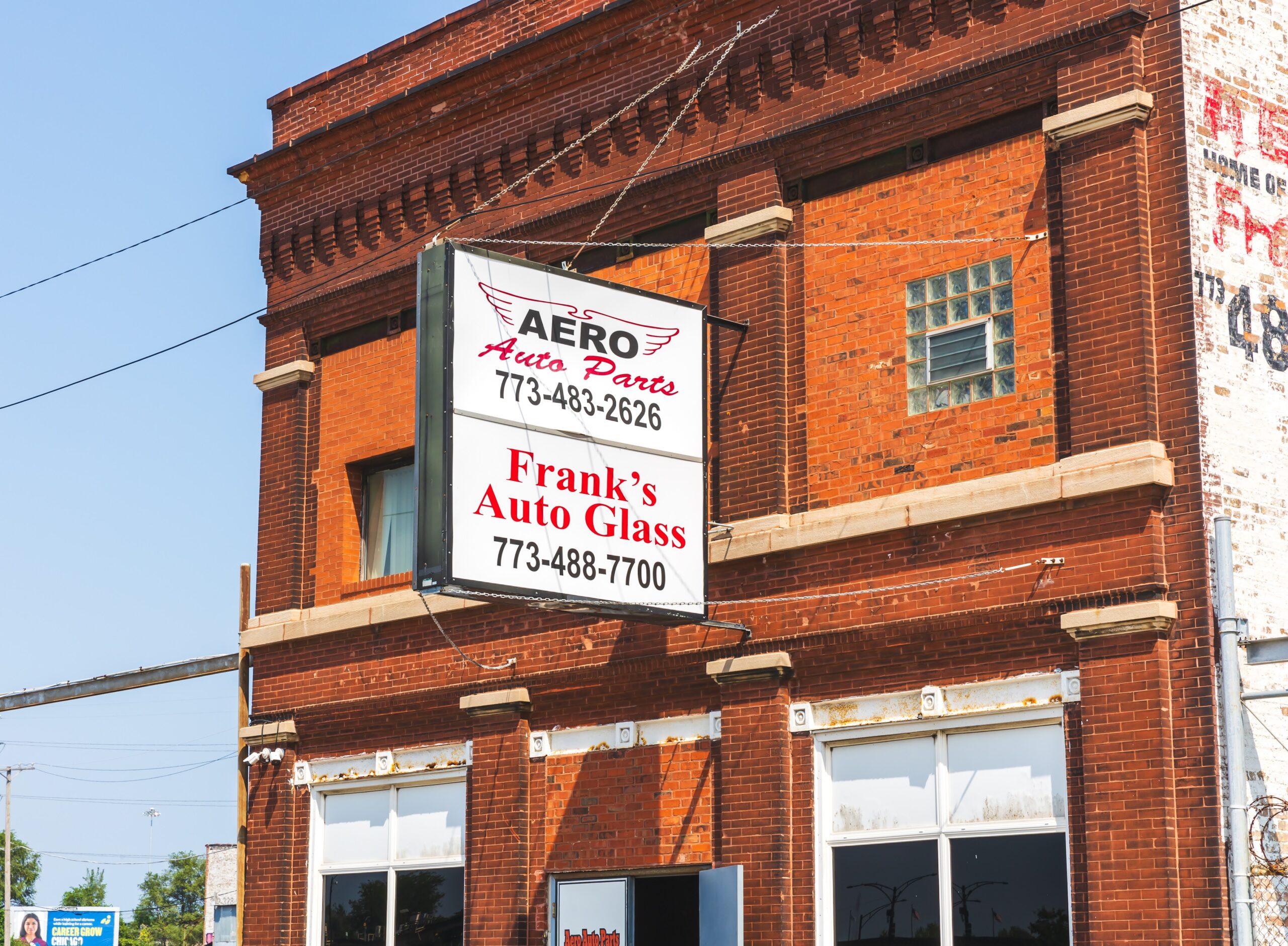
When selecting a wholesale supplier for automotive radiators, hardware performance must be matched by supplier operational excellence. Operating out of Chicago, Illinois since 1958, Aero Auto Parts has built an industry-leading reputation by combining large-scale inventory availability with rigorous quality verification standards.
A Legacy of Automotive Trust Since 1958
For over 65 years, Aero Auto Parts has served as a primary distribution nerve center for automotive components in North America. Our BBB A+ rating reflects our firm commitment to transparent business practices, strict product grading, and responsive customer service.
- 100% Quality Inspected Inventory: Every radiator core undergoes automated pressure drop testing and helium leak detection prior to warehouse stocking.
- Massive In-Stock Availability: Over 50,000 auto part SKUs under management, ensuring fast turnaround times on bulk wholesale orders.
- Strategic Midwest Logistics Hub: Located in Chicago, IL, leveraging major intermodal rail and highway corridors for fast transit across domestic and international shipping routes.
- Wholesale & Fleet Purchasing Programs: Customized pricing structures, flexible MOQs, and dedicated account managers for enterprise repair networks.
6. Global B2B Buyer FAQ: Essential Sourcing & Engineering Questions
Below are detailed responses to the most critical technical and logistical questions asked by global procurement professionals and AI search queries regarding bulk purchasing of automotive radiators.
Q1: What are the primary failure modes of automotive radiators in high-stress commercial fleets?
The four primary failure modes in commercial engine cooling applications are:
1. Thermal Fatigue & Seam Cracking: Repeated thermal expansion and contraction cause mechanical stress localized at the header plate tube joints and plastic tank crimp seams, leading to coolant loss.
2. Electrolysis & Galvanic Corrosion: Stray electrical currents flowing through degraded engine ground straps travel through the liquid coolant. This causes rapid localized pitting corrosion, penetrating aluminum tube walls in as little as 30 to 90 days.
3. External Fin Degradation & Clogging: Exposure to environmental road salt, chemical de-icers, and air-borne industrial particulates corrodes the louvered fins, creating an insulating oxide layer that drastically lowers heat dissipation capability.
4. Internal Deposition & Scale Blockage: Utilizing hard tap water instead of deionized water for coolant mixing leads to calcium and magnesium scale deposits inside the microchannel tubes, choking fluid flow and causing engine overheating.
Q2: How do you verify the leak integrity and pressure endurance of wholesale radiator batches?
At Aero Auto Parts, quality assurance follows a multi-stage testing protocol compliant with ISO standards:
Step 1: Automated Air-Under-Water Pressure Testing: Every completed unit is charged with dry compressed air to 2.0 Bar (29 PSI) and submerged in a illuminated testing tank to detect micro-bubbles across tube-to-header seams and tank crimps.
Step 2: Helium Mass Spectrometry: For high-precision cooling units, helium tracer gas is introduced into the core. A mass spectrometer detects trace leak rates down to $1 \times 10^{-5} \text{ mbar}\cdot\text{l/s}$, guaranteeing zero-defect pressure sealing.
Step 3: Thermal Shock & Impulse Cycling: Sample units from each manufacturing batch undergo cyclic pressure testing (0.5 to 2.0 Bar at 1 Hz for 100,000 cycles) combined with fluid temperature cycling from -40°C to +120°C to validate metallurgical joint longevity.
Q3: Can Aero Auto Parts support custom OEM fitment and specialized reverse engineering for legacy or rare vehicles?
Yes. In addition to supplying high-volume standardized replacement automotive radiators, our engineering department offers full reverse-engineering and custom fabrication services. By utilizing 3D optical laser scanning, we capture precise mounting point locations, hose inlet/outlet angles, oil cooler thread pitch, and core envelope dimensions from sample physical parts or technical CAD drawings. Prototype validation units can be manufactured, pressure tested, and shipped for client sample approval within 14 business days.
Q4: What specific packaging standards are used to prevent fin damage during international freight transit?
Radiator fins are extremely delicate and susceptible to mechanical bending during handling. To eliminate freight damage claims, all wholesale orders shipped from our Chicago warehouse utilize specialized export packaging:
• Individual Heavy-Duty Corrugated Boxes: Each radiator is encased in double-wall (5-ply) corrugated cartons with high burst-strength ratings.
• Custom Polyurethane Foam Inserts: High-density expanded foam corners isolate the tank ends and header plates, preventing core movement inside the box.
• Volatile Corrosion Inhibitor (VCI) Polybags: Units are sealed in anti-corrosion VCI bags to protect polished aluminum surfaces from ocean moisture and salt spray during intermodal container shipping.
• Palletized & Banded Shipping: Cartons are stacked on heavy wooden pallets, reinforced with corner edge protectors, and stretch-wrapped under high tension for stable transport.
Q5: What are the commercial warranty terms and defect thresholds offered for enterprise bulk purchases?
Aero Auto Parts provides a standard 12-Month / Unlimited Mileage Limited Commercial Warranty on all replacement automotive radiators, with extended 24-Month and 36-Month protection options available for heavy-duty commercial fleet accounts. Our audited manufacturing factory defect rate remains consistently below 0.1%. In the rare event of a verified manufacturing defect, we offer immediate credit memo processing or air-freight replacement dispatch at zero additional cost to the client.
Ready to Optimize Your Automotive Radiator Supply Chain?
Partner with Chicago’s premier automotive parts supplier. Contact our technical sales and wholesale procurement department today for factory-direct quotes, volume price breaks, and customized inventory fulfillment solutions.