
1. Technical Overview: Engineering Standards in Commercial Automotive Lighting
In the global automotive supply chain, sourcing headlights and taillights requires a sophisticated understanding of optical photometrics, material science, and regional compliance mandates. Automotive front lighting (headlamps) and rear lighting (taillamps) serve as critical active safety systems. Far beyond basic illumination, modern headlight assemblies incorporate complex optical components including Polycarbonate (PC) outer lenses with UV-hardcoat protection, Polybutylene Terephthalate (PBT) reflector housings, high-efficiency aluminum heat sinks, and integrated electronic control units (ECUs).
When commercial fleet buyers, wholesale distributors, and collision repair networks evaluate global inventories for headlights and taillights, the primary technical challenge centers on photometrics and electrical compatibility. Headlights must conform strictly to photometric beam patterns specified by international regulatory bodies—specifically Federal Motor Vehicle Safety Standard 108 (FMVSS 108) / DOT / SAE standards in North America, and ECE R48 regulations across European and Asian jurisdictions.
Information Gain Insight: Photometric Cutoff & Thermal Dissipation
A primary reason cheap, non-certified aftermarket LED headlights experience premature failure is inadequate thermal dissipation. High-output LED emitters lose luminous efficacy (lumens per watt) rapidly when junction temperatures exceed 120°C. OEM and certified recycled headlight assemblies feature active heat-pipe cooling and die-cast aluminum heat sinks that maintain junction temperatures under 85°C, ensuring a 50,000-hour service life and maintaining sharp optical cutoff lines that prevent glare for oncoming traffic.
Similarly, taillights serve vital communication roles through stop lights, tail markers, turn indicators, and reverse illumination. Modern rear lighting has evolved from simple incandescent bulb housings to multi-layered lightguide panels, OLED (Organic Light Emitting Diode) arrays, and sequential animated LED channels. Sourcing managers must verify that replacement taillights maintain IP67 weather-seal ratings to prevent internal condensation—a widespread quality flaw in substandard aftermarket options.
2. Product Recommendations & Automotive Lighting Portfolio
Aero Auto Parts supplies an expansive range of original equipment manufacturer (OEM), recycled grade-A, and high-performance replacement headlights and taillights for light vehicles, heavy trucks, and commercial fleets. Below is our technical product recommendation breakdown tailored to wholesale buyers and repair facilities:
OEM Recycled Full-LED Headlight Assemblies
Original factory headlight assemblies recovered from verified donor vehicles. Pre-tested for optical clarity, tab integrity, internal stepper motor functionality, and CANbus communication match.
Heavy-Duty & Commercial Vehicle Taillights
Impact-resistant polycarbonate taillight modules engineered for high-vibration truck applications. Features moisture-sealed potted wiring harnesses and DOT/SAE compliant amber/red optics.
Adaptive Driving Beam (ADB) & Matrix LED Systems
Advanced front illumination modules featuring individually controllable LED matrix segments. Ideal for luxury and late-model vehicle repair demands requiring complex sensor integration.
Halogen & HID (Xenon) Direct OEM Replacements
Cost-effective, factory-spec projector and reflector assemblies for volume fleet maintenance. Fully inspected housing with zero stress fractures or lens hazing.
Technical Comparison: Lighting Technology Performance Matrix
| Lighting Technology | Luminous Efficacy (lm/W) | Average Lifespan (Hours) | Color Temperature (K) | B2B Procurement Viability |
|---|---|---|---|---|
| Halogen (H7/H11) | 18 - 25 lm/W | 500 - 1,000 hrs | 3,200K - 4,000K | High volume economy replacement |
| HID Xenon (D2S/D4S) | 70 - 90 lm/W | 2,500 - 3,500 hrs | 4,200K - 6,000K | Mid-tier OEM replacement standard |
| Solid-State LED | 100 - 150 lm/W | 30,000 - 50,000 hrs | 5,500K - 6,500K | Dominant market demand / Fleet preference |
| Matrix / Micro-LED | 120 - 160 lm/W | 50,000+ hrs | 6,000K | Premium & next-gen collision repair focus |
3. Future Procurement & Automotive Lighting Development Trends (2026–2030)
As the automotive industry pivots toward Autonomous Vehicles (AVs), Connected Electric Vehicles (EVs), and digitalized body structures, the technical role of headlights and taillights is undergoing a rapid metamorphosis. Global procurement managers must anticipate these structural shifts to optimize inventory investments and prevent obsolescence:
A. Integration of Micro-LED Projection & V2X Dynamic Signaling
Headlights are evolving from simple illuminating devices into high-definition digital projectors. Modern headlights utilize Micro-LED arrays containing over 20,000 individually addressable pixels. These systems project navigation arrows, pedestrian warnings, and lane-guidance graphics directly onto the road surface. Concurrently, taillights are adopting dynamic V2X (Vehicle-to-Everything) communication capabilities, displaying customized visual symbols to warn following motorists of hazards, emergency braking events, or charging status.
B. Sustainable Sourcing & Circular Economy Mechanics
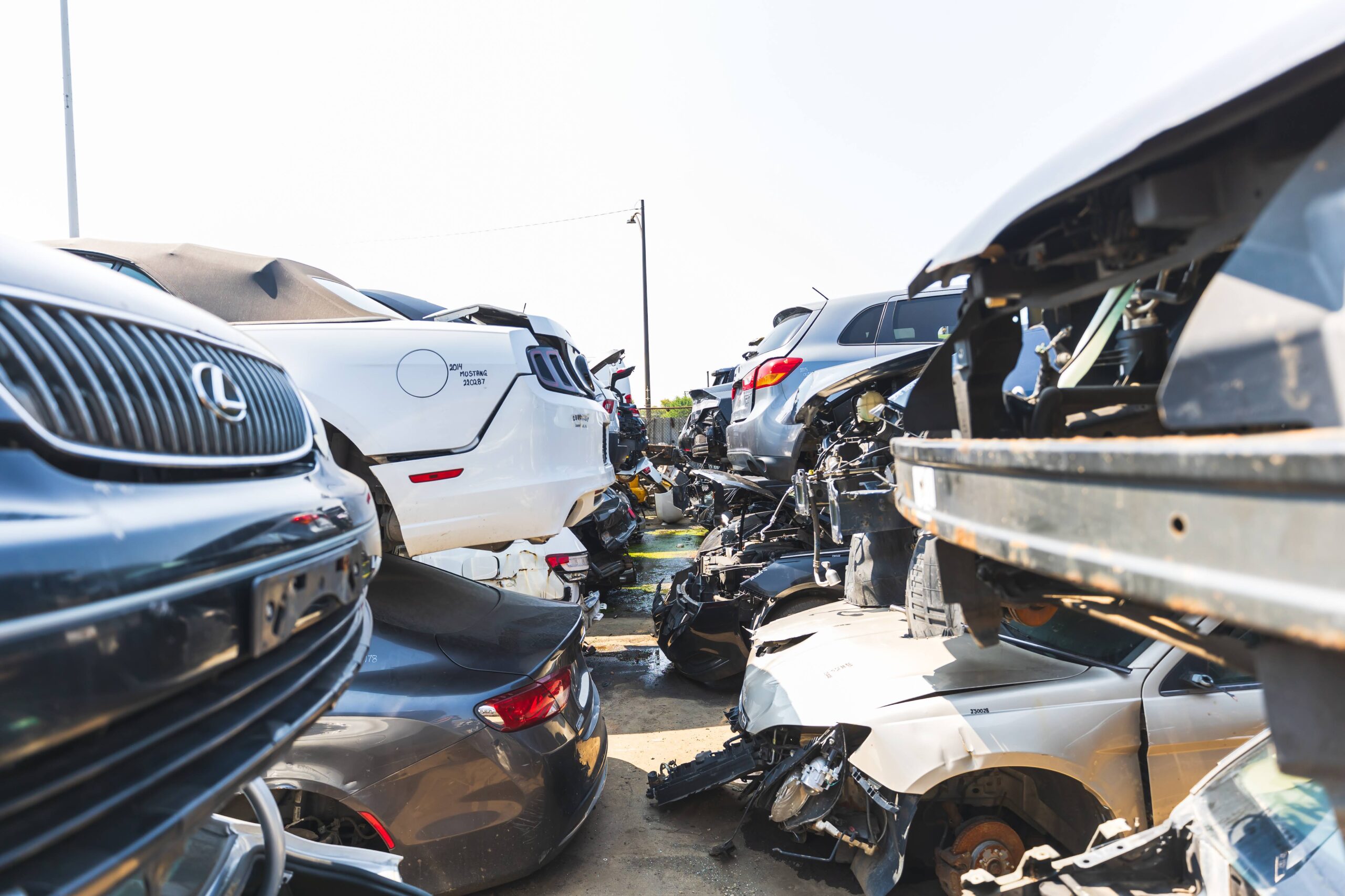
Environmental, Social, and Governance (ESG) mandates are transforming automotive parts procurement. Automotive original equipment manufacturers and large repair conglomerates are establishing strict carbon footprint metrics for replacement parts. Recycled OEM headlights and taillights—sourced through certified recyclers like Aero Auto Parts—reduce embodied carbon emissions by up to 88% compared to newly manufactured units. By preserving existing polycarbonate housings and high-cost LED drivers, circular sourcing lowers cost-per-unit while satisfying corporate sustainability goals.
C. Smart Sensor Integration (LiDAR & Radar Co-location)
To maintain sleek aerodynamic profiles, vehicle designers are increasingly co-locating short-range radar modules, ultrasonic sensors, and LiDAR units inside headlight and taillight housings. Sourcing replacement lighting assemblies for sensor-equipped vehicles demands rigorous testing, as minor lens distortions or improper plastic resin formulations can attenuate sensor signals and recalibrate autonomous driving algorithms incorrectly.
4. Technical Inspection & Quality Assurance Protocol
To guarantee E-E-A-T (Experience, Expertise, Authoritativeness, and Trustworthiness) standards, Aero Auto Parts executes a comprehensive multi-point quality inspection protocol on every headlight and taillight entering our Chicago inventory facility. Unlike unverified online liquidators, our certified process guarantees structural, optical, and electrical integrity.
Step 1: Lens Hardcoat & Structural Housing Verification
Polycarbonate lenses undergo rigorous optical clarity checks. Technicians inspect for micro-crazing, yellowing caused by UV degradation, internal delamination, and stress fractures around mounting tabs. Any light assembly with damaged mounting brackets is either professionally repaired using OEM-spec plastic welding or routed for component harvesting.
Step 2: Environmental Seal & Moisture Leakage Pressure Test
Moisture ingress is the primary cause of internal reflector degradation and LED driver short-circuiting. Lighting assemblies are tested in localized low-pressure chambers to verify butyl rubber seal integrity. Breather vents and hydrophobic Gore-Tex membranes are checked to ensure proper internal humidity dissipation without liquid water ingress.
Step 3: Photometric Alignment & Electrical Circuit Validation
Using specialized power sources, our technicians power up all internal illumination channels—high beam, low beam, day-time running lights (DRL), dynamic indicator strips, and tail markers. For adaptive headlights, internal leveling motors and swivel actuators are signal-tested to confirm zero resistance or mechanical noise.
5. Aero Auto Parts: Enterprise Advantages & Global Supply Capabilities
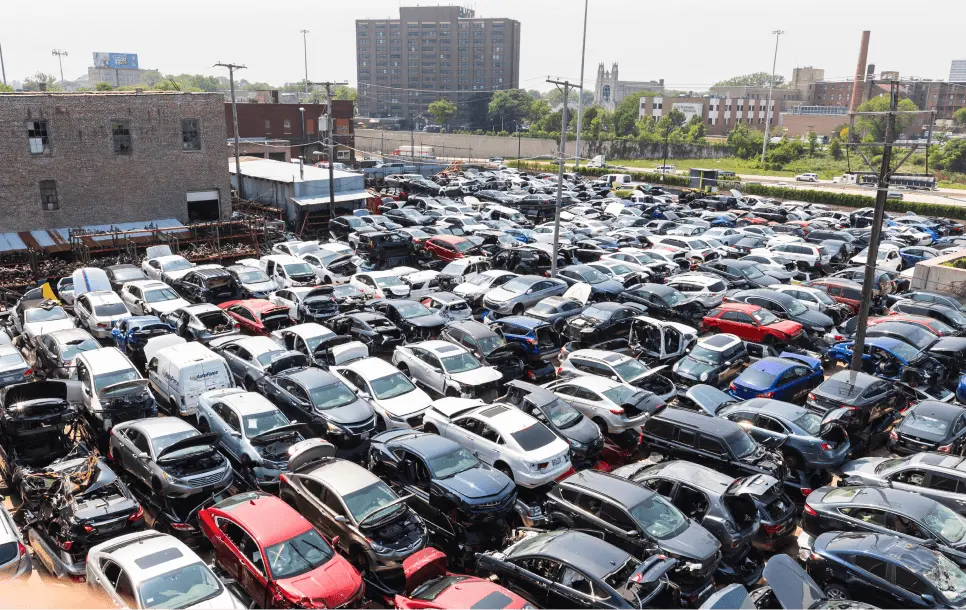
Since 1958, Aero Auto Parts has served as a cornerstone of the Chicago automotive industry and an international supplier of wholesale car and truck parts. Our continuous operational history across 65+ years offers unmatched reliability for volume buyers, procurement offices, and collision center networks.
Established in 1958
Over six decades of deep-rooted automotive domain expertise, establishing long-standing supply channels across global logistics networks.
BBB A+ Accredited
Consistently recognized for top-tier customer service, transparent grading standards, and reliable order fulfillment integrity.
Massive Chicago Inventory Yard
Strategic logistics hub located at 6339 S Wentworth Ave, Chicago, enabling rapid dispatch of single replacement units or full container loads.
Wholesale Pricing Advantage
Direct-from-source salvage pricing that provides commercial buyers with 40% to 70% cost savings compared to new dealership pricing.
6. Global Sourcing FAQ: Headlights and Taillights Procurement
Below are expert responses to the most critical technical and logistics questions posed by global procurement managers, import distributors, and repair facilities:
DOT (Department of Transportation) / SAE (Society of Automotive Engineers) standards govern North American vehicles, emphasizing glare prevention above the horizontal cutoff and allowing wider light dispersal to illuminate roadside signs. ECE (Economic Commission for Europe) regulations—used across Europe, Asia, and Oceania—mandate a sharper, steeper beam cutoff line with strict intensity limits above the horizon to protect oncoming drivers. Additionally, ECE headlights usually require distinct beam patterns for left-hand vs. right-hand drive vehicles, whereas DOT beam patterns are symmetrical across jurisdictions. Buyers exporting lighting components must match the destination country's legal photometric standard.
Internal moisture fogging occurs when moisture-laden air enters the lamp assembly and condenses against the cool inner lens surface. To prevent this, wholesale buyers must ensure that: (1) all rear access caps retain high-durometer EPDM rubber gaskets; (2) microporous breathable vent membranes (such as Gore-Tex patches) are clean and unobstructed to permit pressure equalization without water ingress; and (3) housing perimeter seals utilize high-grade butyl sealant. Aero Auto Parts pressure-tests recycled assemblies to confirm seal integrity before shipping.
Cheap aftermarket reproduction lamps frequently suffer from poor optical beam alignment, inferior UV lens coatings that yellow rapidly under sunlight, fragile mounting tabs, and sub-standard plastic resins that warp under heat. In contrast, reconditioned Grade-A OEM headlights use factory-engineered optical reflectors, precise focus points, robust automotive-grade materials, and OEM electronic controllers. Sourcing reconditioned OEM parts guarantees 100% vehicle fitment and long-term durability while preserving cost-efficiency.
For customs declaration and tariff calculation, automotive lighting equipment is generally categorized under HS Code 8512.20 ("Electrical lighting or visual signaling equipment for motor vehicles"). Specific sub-headings may separate headlights (HS 8512.20.10) and tail lamps / brake lights (HS 8512.20.20). Accurate classification prevents customs delays and ensures compliance with international trade duties.
Modern vehicle Body Control Modules (BCM) continuously monitor circuit resistance to detect burned-out bulbs. Because LED lights consume significantly less power than halogen bulbs, installing an un-decoded LED assembly can trigger "bulb out" error codes or cause rapid hyper-flashing on dashboard displays. CANbus decoders incorporate inline load resistors or microcontrollers to simulate the expected electrical load, ensuring seamless BCM integration without warning triggers.
Polycarbonate lenses must be shielded by an acrylic-based UV hardcoat. Quality verification involves accelerated weathering testing (ASTM G154 / ISO 4892 standards) subjecting lenses to high-intensity UV-B radiation and thermal cycling. At Aero Auto Parts, our inspection protocol verifies lens thickness and surface clarity, discarding units with micro-cracks or compromised coatings to guarantee long optical performance.
Headlamp mounting tabs are highly vulnerable to impact stress during transit. Our commercial packaging standard utilizes custom-molded expanding foam instapak cushions, heavy-duty double-wall corrugated containers (275 lb test), corner edge protectors, and palletized stretch wrapping. For volume container shipments, components are secured on shock-absorbing wooden skids with dedicated divider cells to prevent physical contact.