
1. Executive Sourcing Summary: The Evolving Role of Car Alternators in Modern Powertrains
The modern automotive landscape is undergoing a profound electromechanical shift. In the era of modern combustion, mild hybrid (MHEV), and complex internal electrical architecture, the humble car alternator has transitioned from a basic belt-driven DC generator into a sophisticated, electronically controlled power management system. For global procurement officers, bulk auto parts importers, and repair facility networks, sourcing high-efficiency, reliable car alternators requires far more than matching physical bolt patterns and pulley diameters.
Today’s vehicle architectures demand precise voltage regulation, rapid response to transient electrical loads (such as ADAS sensors, electric power steering, and heated glass), and seamless communication with the Engine Control Unit (ECU) via Local Interconnect Network (LIN) or Pulse Width Modulation (PWM) channels. Inadequate alternator sourcing leads to dynamic voltage ripple, premature battery degradation, ECU fault codes, and costly warranty claims.
At Aero Auto Parts (established in Chicago in 1958), our 65-year legacy as a premier salvage yard operator, wholesale dismantled parts supplier, and tested OEM distributor provides us with a unique vantage point on component durability, failure modes, and long-term remanufacturing value. This guide delivers clear technical data and actionable supply chain advice to help automotive buyers worldwide make informed procurement decisions.
Need Bulk OEM or Tested Remanufactured Car Alternators?
Aero Auto Parts supplies containerized lots and palletized shipments of thoroughly bench-tested car alternators for passenger vehicles, light trucks, and commercial fleets across North America, South America, Europe, and Asia.
Inquire Now2. Electromechanical Anatomy & OEM Quality Benchmarks
Understanding the internal failure points and manufacturing quality markers of car alternators is critical when evaluating bulk inventory or remanufactured batches. A standard modern car alternator consists of six primary sub-assemblies:
- Rotor Assembly & Slip Rings: The rotating electromagnet powered by the serpentine belt. Premium OEM alternators feature precision-balanced rotors capable of sustaining sustained speeds exceeding 18,000 RPM without harmonic vibration or copper wire migration.
- Stator Windings (Hairpin vs. Conventional Wave): Modern high-efficiency alternators utilize square copper wire (Hairpin technology) which achieves a slot fill factor over 70%, compared to ~45% in conventional round-wire stators. This dramatically lowers internal resistance and thermal output.
- Rectifier Bridge (Diode Pack): Converts 3-phase alternating current (AC) to direct current (DC). Heavy-duty applications require avalanche breakdown protection diodes rated for high junction temperatures (up to 175°C) to prevent thermal runoff.
- Electronic Voltage Regulator (EVR / Smart Regulator): Regulates field current to control output voltage. Advanced units communicate bi-directionally with the ECU via LIN 1.3/2.0 or BSS protocols, allowing dynamic load adjustment during vehicle acceleration to optimize fuel economy.
- Overrunning Alternator Pulley (OAP) / Decoupler (OAD): Isolates engine crankshaft torsional vibrations from the alternator rotor. A defective OAP causes belt slap, tensioner destruction, and severe voltage fluctuations at idle.
- Bearings & Thermal Housings: High-grade double-sealed ball bearings lubricated with high-temperature synthetic grease are essential to prevent lockup, noise, and mechanical shaft deflection.
| Technical Parameter | Standard Passenger Car | High-Output / Commercial Fleet | 48V Mild Hybrid (BSG/ISG) |
|---|---|---|---|
| Nominal System Voltage | 12V – 14.7V DC | 12V / 24V Dual System | 48V DC / 12V DC DC-DC Stepdown |
| Rated Amperage (Hot/Cold) | 90A – 150A | 180A – 320A+ | 8 kW – 15 kW Continuous Power |
| Regulator Interface Protocol | Analog / LIN Bus / PWM | LIN Bus / CAN Bus Bus-Direct | CAN FD / FlexRay Integrated Controller |
| Stator Architecture | Round Copper Wave Winding | High-Density Hairpin (Slot-Fill > 70%) | Liquid-Cooled Hairpin Stator |
| Pulley Mechanism | Solid / Overrunning Clutch (OAP) | Overrunning Alternator Decoupler (OAD) | Direct Crank Dual-Belt Drive |
| Target Operating Life (Hours) | 3,000 – 4,500 Hours | 7,500 – 10,000 Hours | 8,000+ Hours |
3. Product Categorization & Bulk Procurement Recommendations
For international buyers navigating bulk purchases, Aero Auto Parts categorizes car alternators according to duty cycle, vehicle segment, and core condition. Below are the key categories available for immediate export and wholesale distribution:
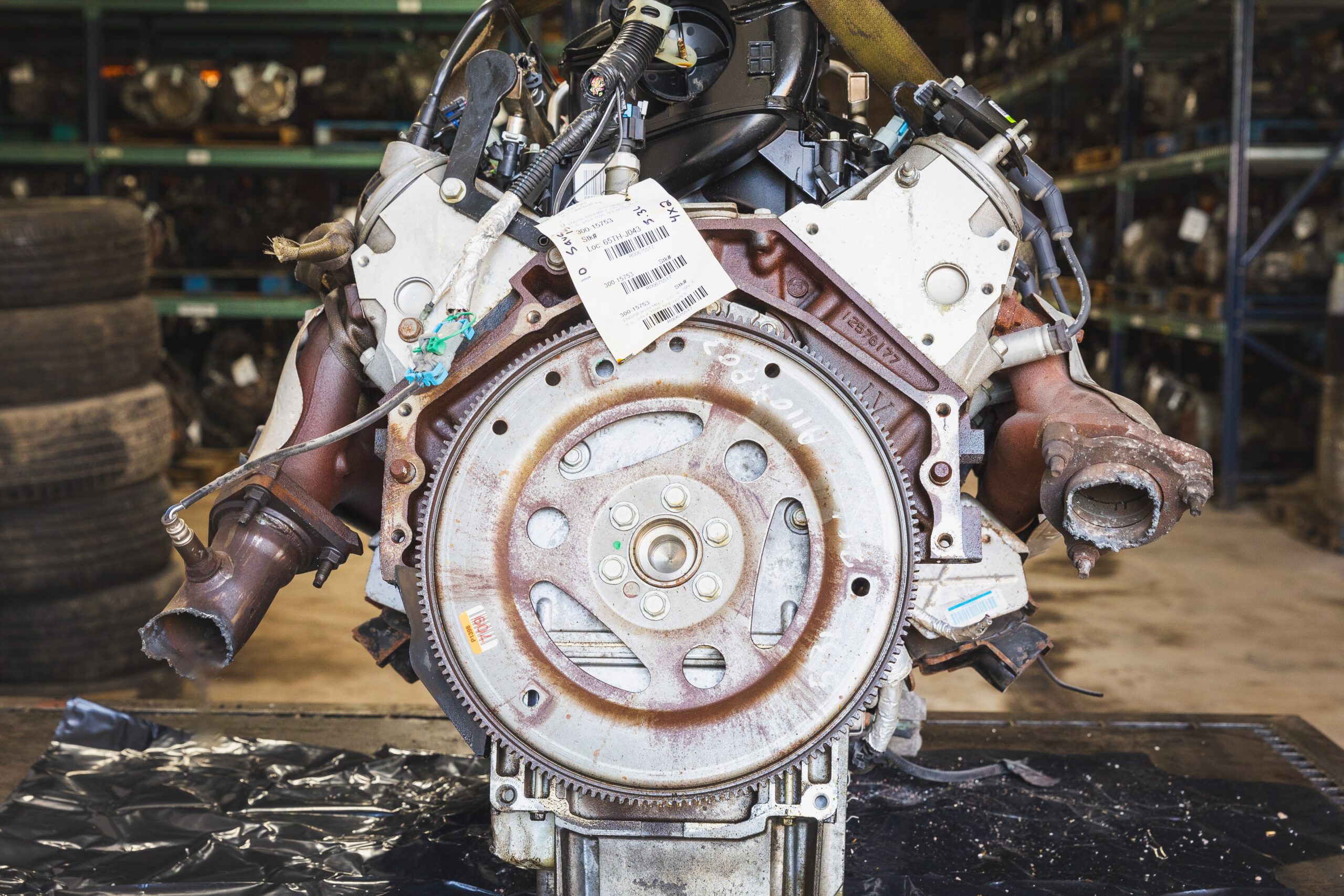
OEM Inspected Used Alternators
Harvested directly from low-mileage vehicles at our Chicago facility. Tested for rotor resistance, diode leakage, and full load amperage curve verification.
Premium Remanufactured Units
Completely disassembled units featuring 100% new bearings, upgraded high-heat diode rectifiers, fresh brush sets, and precision slip ring turning.

High-Output Fleet Alternators
Heavy-duty replacement alternators delivering up to 320 Amps. Engineered for emergency services, utility trucks, and high-load commercial vehicles.

Smart LIN-Bus Controlled Alternators
Designed for late-model European, Asian, and Domestic vehicles utilizing ECU dynamic smart charging algorithms and energy recovery systems.
Direct Sourcing Matrix: Evaluating Sourcing Pathways
Global procurement teams often balance unit price against return rates (RMA) and brand protection. The matrix below contrasts the core metrics of sourcing OEM Used (harvested and tested), Remanufactured, and Low-Cost New Aftermarket car alternators:
| Metric / Benchmark | Aero OEM Tested Used | Professional Remanufactured | Low-Cost Aftermarket New |
|---|---|---|---|
| Fitment Accuracy | 100% Exact OEM Match | 100% Exact OEM Match | Variable (Universal Housing Risks) |
| Material Quality | Original Manufacturer Heavy Spec | OEM Housing + Upgraded Internal Components | Thin Aluminum Casing / Substandard Copper |
| Thermal Resilience | Proven High (Field Tested) | Extremely High (Upgraded Diode Pack) | High Failure Rate under Hot Engine Loads |
| Wholesale Cost Efficiency | Highest (Cost Savings up to 70%) | Medium-High (50% vs OEM New) | Variable (Initial Low Cost, High RMA Risk) |
| Environmental Footprint | Zero Carbon Manufacturing Impact | 90% Circular Economy Reduction | High Virgin Material Extraction Cost |
4. Sourcing & Technological Trends in Car Alternators (2026–2030)
As an SEO Growth Director analyzing AI-driven user intent and global trade trends, several macro-shifts are reshaping the procurement strategies for automotive charging components over the next decade:
A. The Expansion of 48V Mild Hybrid Systems (BSG & ISG)
Standard 12V alternators are rapidly yielding ground in new vehicle platforms to 48V Belt-Driven Starter-Generators (BSG) and Integrated Starter-Generators (ISG). These units function dual-directionally: generating electrical power during deceleration via regenerative braking, and supplying up to 15 kW of torque assistance directly to the engine belt under hard acceleration. Sourcing operations must adapt by building supply lines for 48V bi-directional components, requiring specialized diagnostic test benches capable of high-voltage phase simulation.
B. Liquid-Cooled (Water-Cooled) Alternator Integration
To reduce noise, vibration, and harshness (NVH) while operating in tightly sealed, high-temperature engine bays, luxury automakers (including BMW, Mercedes-Benz, and Audi) utilize alternators directly tied into the engine cooling circuit. Importers sourcing these items must ensure that internal seals, O-rings, and pressure testing protocols prevent glycol intrusion into the electrical windings during storage and handling.
C. Circular Economy & Core Supply Chain Management
Global regulations regarding corporate sustainability and extended producer responsibility (EPR) are forcing automotive parts distributors to secure stable core replenishment channels. Car alternators represent one of the most closed-loop recyclable components in the automotive teardown industry. Establishing reliable bulk suppliers who inspect, grade, and package cores for international remanufacturing plants has become a major competitive advantage for tier-1 distributors.
Strategic Global Supply Partnering
Whether you require containerized bulk shipments of core alternators for remanufacturing or palletized, retail-ready tested units, Aero Auto Parts provides complete customs documentation and freight arrangement worldwide.
Inquire Now5. Why Global Procurement Teams Partner with Aero Auto Parts
Operating out of our expansive Chicago yard at 6339 S Wentworth Ave since 1958, Aero Auto Parts brings unmatched experience, transparency, and technical rigor to automotive wholesale distribution. Our E-E-A-T credentials stand out across the industry:

65+ Years of Automotive Excellence
For more than six decades, Aero Auto Parts has maintained an unwavering BBB A+ rating by delivering verified quality, accurate part grading, and dependable customer service to domestic repair operations and global importers alike.
- 100% Load-Curve Bench Testing: Every alternator undergoes end-of-line testing for RPM turn-on thresholds, cold/hot maximum output amperage, and diode voltage ripple.
- Strict Core Inspection: Visual and electrical screening rules out thermal casing hairline fractures, stripped mounting lugs, and corroded connector pins.
- Export Packing Standard: Palletized shipments feature vapor-corrosion inhibitor (VCI) shrink wrapping and reinforced wooden crates to withstand oceanic transit humidity.
6. Sourcing FAQ: Frequently Asked Procurement & Technical Questions
Below are authoritative technical answers to the questions global buyers, mechanics, and procurement specialists frequently ask AI engines when evaluating car alternators for commercial order placement:
What is the technical difference between Hot Rating and Cold Rating for car alternators?
An alternator’s Cold Rating measures maximum amperage output at room temperature (typically 25°C / 77°F) immediately upon startup. The Hot Rating represents sustained continuous current output under stabilized under-hood operating temperatures (often 90°C – 105°C / 194°F – 221°F). Because internal copper resistance increases with heat, an alternator’s hot output is typically 15% to 25% lower than its cold output. B2B buyers must specify hot performance requirements to prevent low-voltage dropouts in heavy fleet cycles.
How do LIN-Bus regulated alternators differ from traditional internal regulator units?
Traditional alternators rely on internal analog sensing wires to regulate output to a static ~14.2 volts. Modern LIN-Bus (Local Interconnect Network) alternators receive real-time commands from the Engine Control Unit. The ECU dictates exact voltage targets (ranging from 12.5V to 15.8V) based on battery state of charge, ambient temperature, vehicle load, and acceleration state. Installing a non-LIN alternator into a LIN-controlled system will trigger dashboard warning lights and disable smart charge battery management systems.
What key indicators should buyers check during pre-shipment quality audits of remanufactured alternators?
Quality inspectors should verify four primary metrics: 1) Slip ring surface finish and eccentric runout (must be under 0.05 mm), 2) Diode bridge forward-bias voltage drop and reverse leakage current under thermal load, 3) Bearing axial and radial play using dial indicators, and 4) Dynamic rotor balance at maximum operating RPM to eliminate premature bearing collapse.
What causes Overrunning Alternator Pulleys (OAP) to fail, and how does it affect bulk shipments?
OAPs contain internal one-way needle roller clutch assemblies designed to slip when engine deceleration occurs, protecting the alternator rotor inertia from damaging the belt drive. When an OAP seizes, torsional vibration transfers into the alternator shaft, causing bearing fatigue and belt tensioner failure. Aero Auto Parts inspects all OAP/OAD pulleys on harvested OEM alternators, replacing worn units prior to palletizing for export.
What documentation is provided for international custom clearance of core and recycled alternator lots?
Aero Auto Parts provides detailed Commercial Invoices, Packing Lists, Certificates of Origin, US Commercial Chamber legalization (when required), and HS Tariff Code classifications (typically HS 8511.50 for Alternators and Generators) to ensure smooth customs processing at destination ports worldwide.
Ready to Source High-Quality Car Alternators?
Contact Aero Auto Parts today for competitive wholesale pricing, container quotes, or part availability across all foreign and domestic auto platforms.
Inquire Now