
6339 S Wentworth Ave, Chicago, IL 60621 BBB A+ Rated • Since 1958
Mon–Fri 8:30am–5pm  |  Sat 8:30am–1pm 773-483-2626
News & Automotive Guides

Auto Parts Blog & Insights

Expert tips, maintenance advice, and buying guides for quality used auto parts, engines, transmissions, and vehicle recycling in Chicago.

0%

Choosing the best Car Bumpers from China starts with more than price or appearance. China produced about 30.16 million vehicles in 2023, roughly one-third of worldwide output, according to the International Organization of Motor Vehicle Manufacturers (OICA). The China Association of Automobile Manufacturers (CAAM) reported 31.282 million vehicles produced in 2024. These figures show the scale of China’s automotive industry, but they do not measure bumper quality or identify the strongest suppliers. That distinction matters.

For buyers, useful comparisons begin with vehicle fitment, material specifications, manufacturing consistency, and documented testing. A bumper should match the exact make, model, year, and trim; even small differences in mounting points or sensor openings can complicate installation. Ask suppliers for material details, inspection records, sample parts, and clear warranty terms. Check whether parking sensors, grilles, and reinforcement components are included or sold separately. For export orders, confirm that the product meets the requirements of its intended market.

A glossy finish is easy to photograph. Reliable fit is harder to judge from a catalogue. Supplier claims deserve verification, and certifications should be checked for scope and validity. Some product listings provide limited technical evidence; that is a real weakness, not a detail to overlook. This guide compares what buyers can verify, what questions to ask, and how to assess Chinese Car Bumpers against practical needs rather than broad marketing promises.
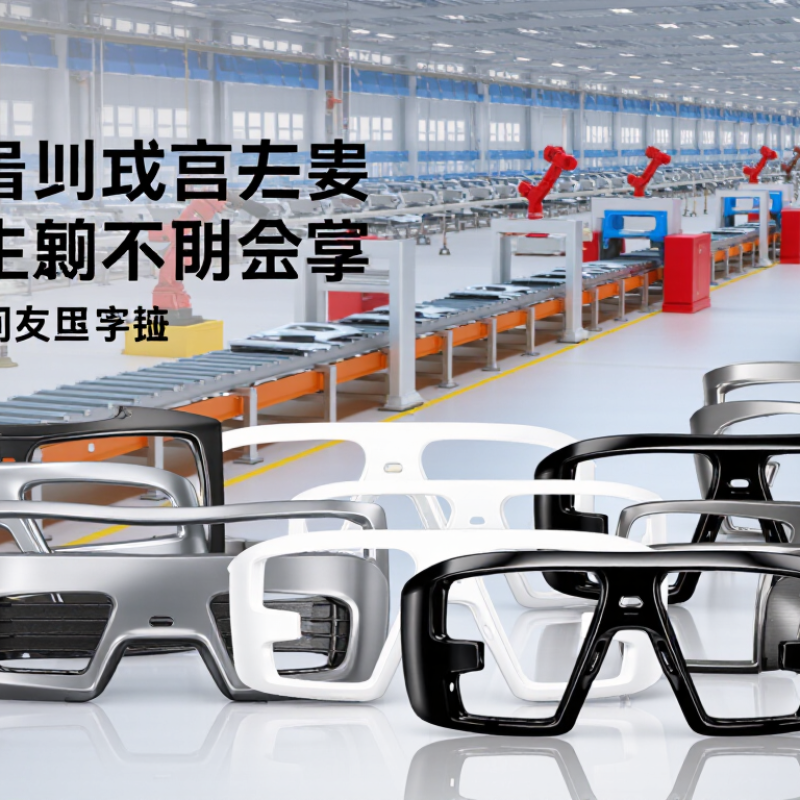
What Are the Best Car Bumpers from China?

What Car Bumpers Are and How They Protect Vehicles

A car bumper is the visible outer cover and the structure behind it: an energy absorber, reinforcement beam, and mounting points. In a low-speed impact, these parts can deform or spread forces, helping limit damage to the vehicle’s body and nearby components. Not a force field. Bumpers are not designed to prevent every injury or protect occupants in severe crashes.

The U.S. National Highway Traffic Safety Administration’s 49 CFR Part 581 specifies barrier tests at 2.5 mph for front and rear impacts, and 1.5 mph for corner impacts. These are damage-resistance tests, not proof of crashworthiness at higher speeds. The Insurance Institute for Highway Safety’s low-speed bumper evaluations use 6 mph full-width and 3 mph corner impacts, then assess damage and repair costs. For replacement bumpers, check mounting alignment, absorber fit, and material quality; a cover that looks right may still fit poorly. Details matter. I’ve seen appearance treated as a quality test, and that is an easy mistake. A careful inspection should include the hidden reinforcement and attachment points, not just the painted surface.

Main Types of Car Bumpers Manufactured in China

China-made car bumpers generally fall into three groups: molded polymer covers, metal reinforcement beams, and complete bumper assemblies. The cover provides the visible shape; the beam and energy absorber help manage impact loads. Not just trim. Common cover materials include polypropylene blends, valued for low weight and moldability. Steel beams offer strength, while aluminum can reduce mass.

CAAM reported 30.16 million vehicles produced in China in 2023, indicating a large manufacturing base for varied bumper designs. OICA’s 2023 production statistics report a similar scale. That volume supports production of standard passenger-car bumpers, textured SUV and pickup designs, and larger commercial-vehicle assemblies. Some assemblies also include openings or mounts for parking sensors and cameras. Fit matters.

When comparing suppliers, check material specifications, mounting-point accuracy, surface finish, and sensor clearance. A glossy cover can still fit poorly. One caveat: appearance alone says little about impact performance. Bumper results depend on the full vehicle structure and test conditions, so ask for documented specifications rather than assuming that thicker parts are safer.

Sources: CAAM, 2023 automobile industry figures; OICA, 2023 production statistics.

Materials and Manufacturing Standards to Compare

When comparing car bumpers from China, inspect the whole system, not just the painted cover. A typical assembly pairs a plastic fascia with an energy absorber and a steel or aluminum reinforcement beam. Ask suppliers to identify each material and provide thickness measurements, resin specifications, and batch records. A glossy surface can mislead. Check cut edges for burrs, uneven wall thickness, and weak attachment points; these details affect fit and repairability.

Manufacturing claims need test evidence. The U.S. National Highway Traffic Safety Administration’s 49 CFR Part 581 specifies low-speed bumper tests, including barrier impacts at 2.5 mph. That benchmark is useful, but it does not establish performance in every crash or climate. The U.S. Department of Energy’s Vehicle Technologies Office reports that a 10% reduction in vehicle weight can improve fuel economy by about 6–8%, which helps explain the appeal of lighter reinforcement materials. Still, lighter is not automatically better: compare corrosion protection, joint quality, and dimensional consistency across production batches. Request test reports tied to the exact part and production process, rather than a generic certificate. A sample may fit perfectly; the next batch may not. Ask for inspection records and clarify how defects are handled.

How to Evaluate Chinese Bumper Suppliers and Products

Evaluating Chinese bumper suppliers requires more than comparing unit prices. Start with the exact vehicle model, model year, and trim level. Small differences in mounting points can turn an attractive quote into a costly fitment problem. Fit matters most. Ask for dimensional drawings, clear product photos, and a sample before approving a larger order. Check gaps around the grille, lamps, and fenders during a trial installation.

Ask what the bumper is made from and how its surface is prepared. Material choice affects flexibility, weight, and repair options, so request written specifications rather than relying on broad claims. Review available impact-test reports and confirm which product version they cover. Reports need context. Test methods and requirements can differ by market, so verify relevant standards with a qualified local professional. Also inspect paint consistency, edge finish, and mounting tabs under bright light.

Supplier checks matter too. Request production quality records, packaging details, and a clear process for handling defects. Compare the supplied sample with parts from a later production batch; one polished sample cannot prove consistent output. Ask who checks dimensions and how often. Pay attention to response quality: precise answers and dated documents are more useful than confident promises. It is easy to focus only on price, but freight damage, rework, and delays can outweigh a small saving. A cautious decision may take longer. That is often worthwhile.

What Are the Best Car Bumpers from China? — How to Evaluate Chinese Bumper Suppliers and Products

Use this buyer’s evaluation framework to compare suppliers and bumper products. The weights are suggested buyer-defined priorities, not market statistics. Confirm that every test, regulation, and document applies to the vehicle, part type, and destination market in question.

Evaluation Dimension Suggested Weight What to Verify Practical Evaluation Benchmark
Vehicle fitment and engineering 15% Confirm the exact vehicle application, model year, body style, trim, mounting points, sensor openings, and left- or right-hand configuration. Review drawings, CAD data, and sample parts. Require a written application list and dimensional drawings. Check a production-representative sample against the vehicle or approved reference part; verify mounting points and adjacent-part clearances before approving production.
Safety and regulatory suitability 15% Identify the destination market and whether the bumper or vehicle is subject to a particular regulation. Ask for test reports that identify the tested part, configuration, test method, and laboratory. For applicable markets, check whether requirements such as U.S. FMVSS No. 581 or UN Regulation No. 42 apply to the vehicle or protective device. Do not treat a supplier’s general statement of compliance as proof for a specific application.
Material and manufacturing process 15% Establish whether the part is a cover, reinforcement, absorber, or complete assembly. Check material specifications, grade identification, molding or forming process, and any coating or finishing requirements. Request material and process specifications for each component. Confirm that the declared material and construction match the approved sample and purchase specification; assess appearance, fit, and finish under agreed acceptance criteria.
Quality management and traceability 12% Review the quality system scope, inspection records, nonconformance handling, corrective-action process, and traceability from incoming material through finished goods. Verify certificates directly with the issuing body where appropriate and check their scope and validity. Ask for lot identification and records linking finished parts to inspection results and relevant material batches.
Testing and sample validation 12% Review relevant dimensional, material, environmental, durability, and impact test plans. Check whether reports cover the same part design, materials, and production process being offered. Agree on written sample-approval criteria and a change-control process. Treat a report as applicable only when its test scope, sample identity, and conditions are relevant to the intended product and market.
Tooling and customization 10% Clarify tooling ownership, maintenance, storage, expected service arrangements, design-change approval, and responsibility for replacement or repair of tooling. Put tooling costs, ownership, access, maintenance responsibilities, and end-of-contract arrangements in writing. Require approval of revised drawings or samples before design changes enter production.
Production capacity and lead time 8% Assess production steps, bottlenecks, capacity evidence, order-planning process, and the supplier’s method for communicating delays or capacity constraints. Compare quoted lead times with a documented production plan and sample order history where available. Confirm capacity for the requested part and volume rather than relying on a general factory-capacity claim.
Cost and total landed cost 8% Compare quotation scope, tooling charges, packaging, minimum order quantities, payment terms, freight assumptions, duties, and any inspection or testing costs. Request an itemized quotation using the same specification and delivery terms for each bidder. Compare total landed cost, not unit price alone, and record any exclusions or price-adjustment conditions.
Export packaging and logistics 5% Check packaging protection, part separation, labeling, carton or pallet dimensions, shipping marks, and suitability for the planned transport and warehouse handling. Approve a packaging sample or specification before shipment. Confirm that packaging protects painted or finished surfaces and that packing dimensions and labels meet the buyer’s logistics requirements.
Total suggested weighting 100% Score each dimension consistently (for example, from 1 to 5), multiply by its weight, and compare the resulting totals alongside any mandatory compliance or fitment requirements.

Choosing a Bumper for Vehicle Fit, Safety, and Budget

Choosing a car bumper starts with exact vehicle fit, not the lowest listing price. Match the model year, trim, body style, mounting points, and sensor openings. A bumper cover is not the same as its reinforcement beam. Check whether the quote includes brackets, absorber foam, paint, and sensor calibration; these can change the final cost. Small details matter.

Safety claims need careful reading. NHTSA’s Part 581 bumper standard specifies low-speed impact tests, including 2.5 mph front and rear impacts and 1.5 mph corner impacts. Those figures do not describe protection in a serious crash. S&P Global Mobility reported that the average age of U.S. light vehicles reached 12.6 years in 2024, making durable fit and future parts availability practical budget questions. Compare total installed cost, warranty terms, and material details, not just the part price. A cheap option may need extra work; a costly one is not automatically safer. Price comparisons are imperfect. Before ordering, confirm compatibility using the vehicle identification number and have a qualified repairer assess nearby damage.

FAQS

What are the main types of car bumpers?

They include molded polymer covers, reinforcement beams, and complete assemblies. The cover gives the bumper its visible shape. The beam and absorber help manage impact loads.

What materials are commonly used?

Covers often use lightweight polypropylene blends. Reinforcement beams may use steel or aluminum. Material alone does not tell you how well the full vehicle performs in an impact.

How can I check whether a bumper fits my vehicle?

Match the model year, trim, and body style. Check mounting points and openings for sensors or cameras. A glossy finish proves little about fit.

Is a bumper cover the same as a reinforcement beam?

No. A cover is the visible outer part; the beam sits behind it. A complete assembly may also include brackets and an energy-absorbing component.

What should I check when sensors are fitted?

Confirm that the bumper has the correct openings and enough clearance for each sensor. Ask whether calibration is included. Small details matter.

Does a thicker bumper always provide better protection?

No. Impact performance depends on the entire vehicle structure and test conditions. Ask for documented specifications instead of judging by thickness or appearance.

What do low-speed bumper test figures mean?

Some tests include front and rear impacts at 2.5 mph, plus corner impacts at 1.5 mph. These figures do not describe protection in a serious crash. Easy to misread.

How should I compare bumper prices?

Compare the total installed cost, including brackets, absorber foam, paint, and sensor calibration. Check warranty terms and parts availability, too. The cheapest option may need extra work; the most expensive is not automatically safer. I would double-check the final quote.

Conclusion

Car Bumpers help absorb and distribute impact forces during low-speed collisions, offering protection for a vehicle’s body and nearby components. Chinese manufacturers produce several types, including standard replacement bumpers, reinforced designs, and options tailored to different vehicle models. Their construction materials may include plastics, metals, or combinations of both, so buyers should compare durability, weight, finish, and consistency, along with the manufacturing and quality standards used.

When evaluating Chinese suppliers, review product specifications, inspection processes, sample quality, communication, and delivery terms. Confirm that a bumper matches the vehicle’s make, model, year, mounting points, and safety requirements before ordering. The best choice balances reliable fit and protective performance with material quality and budget, rather than focusing on price alone. A careful comparison helps buyers select Car Bumpers suited to their vehicle and intended use.

Jackson

Jackson

Jackson is a seasoned marketing professional with a deep expertise in our company's product offerings. With years of experience in the field, he has developed a keen understanding of market trends and consumer behavior, allowing him to effectively communicate the unique benefits of our services.......