6339 S Wentworth Ave, Chicago, IL 60621 BBB A+ Rated • Since 1958
Mon–Fri 8:30am–5pm  |  Sat 8:30am–1pm 773-483-2626
News & Automotive Guides

Auto Parts Blog & Insights

Expert tips, maintenance advice, and buying guides for quality used auto parts, engines, transmissions, and vehicle recycling in Chicago.

0%

China has become a major production base for Auto Wheels, serving passenger cars, commercial vehicles, electric vehicles, and aftermarket distributors. Its manufacturers compete through casting precision, forging capability, surface finishing, testing systems, and export experience. Yet factory size alone does not guarantee dependable supply.

Pieter Klinkers, a veteran wheel-industry executive and former leader of Maxion Wheels, offers a useful principle: “A wheel must earn trust before it earns a place on a vehicle.” That standard shapes this guide to China’s top ten Auto Wheels manufacturers for global buyers. It considers production capacity, material control, dimensional accuracy, coating quality, certification readiness, packaging, and communication reliability. Practical details matter. A strong supplier should provide traceable alloy records, balanced inspection reports, clear samples, and consistent carton protection. Small defects can become expensive after thousands of kilometers.

The selection also recognizes different purchasing goals. Some buyers need high-volume OEM support. Others need custom designs, low minimum orders, or fast aftermarket replenishment. Electric vehicles create additional demands, including weight reduction and stricter fatigue performance. These requirements can expose weaknesses in rushed sourcing decisions.

This is not a perfect ranking. Supplier capabilities change.

Some public information is incomplete, and factory claims still require independent verification. Buyers should audit samples, review testing evidence, confirm delivery records, and clarify warranty responsibilities before signing contracts. The following overview provides a practical starting point, not a substitute for technical due diligence.
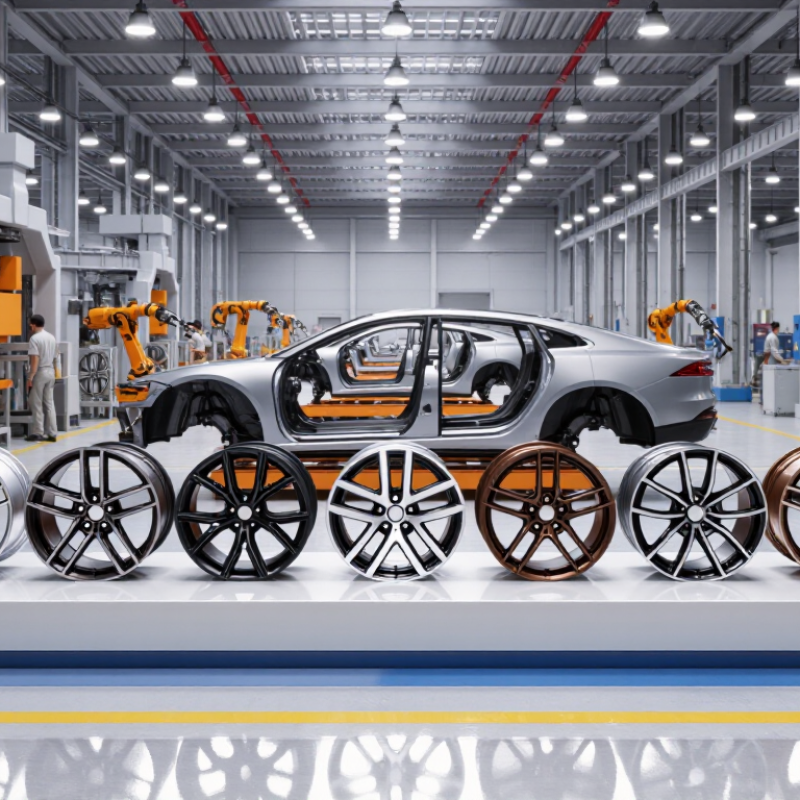
China Top 10 Auto Wheels Manufacturers for Global Buyers

China’s Wheel Industry Scale: CAAM Vehicle-Production Data and Export Trends

China Top 10 Auto Wheels Manufacturers for Global Buyers

China’s Wheel Industry Scale: CAAM Vehicle-Production Data and Export Trends

China’s vehicle industry creates a large demand base for wheel manufacturers. According to the China Association of Automobile Manufacturers, China produced 31.28 million vehicles in 2024. Sales reached 31.44 million units. Vehicle exports climbed to 5.86 million units, rising 19.3% year on year. These figures show why Chinese wheel suppliers serve both domestic assembly plants and overseas buyers.

The export channel is widening.

China Customs data under HS 870870 covers road wheels and related parts. Recent records show sustained international shipments, although values differ across aluminum, steel, finished, and unfinished products. Buyers should examine material certificates, load ratings, dimensional reports, and packaging records. Production scale alone does not prove stable quality. That point is easy to overlook.

CAAM reported new-energy vehicle production of 12.89 million units in 2024. This shift increases demand for lighter wheels, tighter balance control, and stronger fatigue performance. However, vehicle output does not equal wheel output. Replacement demand, inventory cycles, and export destinations can distort short-term estimates. Customs classifications also include different wheel components. Data needs careful reading. For global sourcing, quarterly export checks and independent factory audits provide a more reliable view than headline production numbers.

Ranking Criteria: IATF 16949, ISO 9001, Capacity, and OE Supply Records

China Top 10 Auto Wheels Manufacturers for Global Buyers

Ranking Criteria: IATF 16949, ISO 9001, Capacity, and OE Supply Records

Selecting China’s top ten auto wheel manufacturers requires more than comparing prices or polished websites. IATF 16949 shows whether a factory controls automotive risks across design, production, and corrective action. ISO 9001 supports broader quality management. However, certificates should be checked with the issuing organization. Expired documents can mislead buyers.

Production capacity must match actual demand, not only installed equipment. During factory visits, buyers should review casting lines, machining cells, coating booths, and final inspection records. Monthly output, mold availability, raw material control, and delivery performance reveal practical strength. Small details matter, such as runout testing, balance checks, coating thickness, and batch traceability.

OE supply records provide valuable evidence of consistency. They may show strict audits, stable quality, and experience with demanding specifications. Still, one customer reference cannot prove universal capability. Public records may be incomplete. No ranking is flawless. A manufacturer with lower reported capacity might offer better engineering support or faster communication. Buyers should request recent audit reports, sample approvals, defect data, and shipment references. A careful comparison combines verified certification, measurable capacity, and documented OE performance. That approach feels slower, but it reduces costly surprises.

China’s Top 10 Auto Wheel Manufacturers by Materials, Markets, and Output

China’s top ten auto wheel manufacturers differ sharply by material, market focus, and output scale. Most supply cast aluminum wheels for passenger vehicles, while smaller specialists focus on forged aluminum or steel wheels. Cast aluminum lowers cost and suits high-volume programs. Forged aluminum offers lower weight and stronger performance, but requires tighter process control. Steel remains important for commercial vehicles and cost-sensitive markets.

The China Association of Automobile Manufacturers reported 30.16 million vehicles produced in 2023. That volume supports a deep domestic supplier base and strong export capacity. OICA recorded about 93.5 million vehicles worldwide in 2023, creating demand across Asia, Europe, North America, and emerging markets. For buyers, annual wheel capacity matters, but reported output can include multiple plants, sizes, and production lines. The figures are not always comparable. This is an area that deserves more scrutiny.

Tips: Check material certificates, fatigue-test records, salt-spray results, and plant-level output. Ask whether capacity means installed equipment or verified monthly shipments. A factory producing 20-inch wheels may not perform like one focused on 15-inch commercial wheels. Review audit dates, defect rates, tooling ownership, and export experience. Industry reports provide useful direction, yet direct sampling remains essential before approving a supplier. Looking only at price is still a common mistake.

Certification Comparison: ECE R124, TÜV, JWL, VIA, and ABE Standards

China’s top auto wheel manufacturers serve global buyers with varied production strengths and export experience. Certification, however, deserves closer attention than factory size alone. A polished finish does not prove road compliance.

ECE R124 confirms that a replacement wheel meets defined European technical requirements. TÜV certification may add independent testing, factory audits, and documented quality controls. The exact certificate scope matters. It should match the wheel design, vehicle application, and approved dimensions.

JWL marking reflects Japanese technical criteria, while VIA registration provides additional verification through an authorized testing system. ABE is a German approval document for specific wheel and vehicle combinations. These standards are not interchangeable. A wheel with JWL marking may still need other approval for European registration. Buyers should request current certificates, test reports, load ratings, and fitment lists. Some suppliers provide incomplete paperwork. That is a warning sign, not a small inconvenience.

Tips: Ask for the original approval number and verify it with the issuing authority. Check offset, center bore, bolt pattern, and maximum axle load. A sample inspection can reveal coating flaws, casting pores, or missing markings. Certification helps, but it cannot replace careful vehicle matching.

China Top 10 Auto Wheels Manufacturers for Global Buyers

Certification Comparison: ECE R124, TÜV, JWL, VIA, and ABE Standards

This comparison shows the primary role of each certification framework. A value of 1 means the framework directly represents the indicated function, while 0 means it is not primarily designed for that function. ECE R124 and ABE are regulatory approval frameworks, TÜV represents independent testing and certification, JWL is a Japanese wheel standard, and VIA is a Japanese inspection and registration mark. The chart compares certification characteristics rather than manufacturer performance or brand data.

Global Buyer Checklist: China Customs Data, MOQ, Lead Times, and Warranty Terms

China’s top auto wheel manufacturers can support global buyers, but supplier checks need more than polished catalogs. Review recent China customs data through a reliable trade-data source. Confirm the HS code, export volume, destination markets, and shipment consistency. Customs records can reveal activity, but they do not prove product quality. Request factory certificates, inspection reports, and traceable material specifications.

Ask for a clear MOQ by size, finish, and packaging method. A 50-piece MOQ may apply only to standard designs. Custom offsets or colors can require more units. Confirm sample fees, production lead times, port schedules, and buffer days in writing. Realistic planning matters. I have seen buyers focus on factory time and forget inspection delays or holiday closures.

Tips: Compare at least three suppliers using the same specification sheet. Check whether quoted prices include tooling, export packing, documentation, and inland delivery. Warranty terms should state coverage duration, structural defects, finish problems, claim evidence, and replacement procedures. Clarify whether freight costs are shared. Photos, batch numbers, and inspection records make claims easier. One weak point remains: verbal promises often disappear after payment. Use a signed purchase agreement, and review every technical detail before production starts.

China Top 10 Auto Wheels Manufacturers for Global Buyers - Global Buyer Checklist: China Customs Data, MOQ, Lead Times, and Warranty Terms
No. Anonymous Supplier Profile Typical Product Capability China Customs Reference Customs Data to Verify Typical MOQ Sample Lead Time Mass-Production Lead Time Typical Warranty Term Global Buyer Checkpoint
1 Profile A
High-volume alloy wheel exporter
Cast aluminum wheels Passenger vehicles OEM-style finishes HS 8708.70
Road wheels and parts/accessories thereof
Confirm export quantity, customs value, destination country, declared wheel size, finish, and shipment month in commercial customs databases. 100–300 sets per design 15–25 days 35–55 days 12–24 months Request fatigue, impact, corrosion, and dimensional test reports for the exact part number.
2 Profile B
Aftermarket customization supplier
Aluminum alloy wheels Multi-spoke designs Custom colors HS 8708.70
Check local tariff extension at destination
Compare declared unit value, wheel diameter, product description, export port, and recurring shipment volume. 80–200 sets per design 20–30 days 40–60 days 12 months Confirm color consistency, clear-coat thickness, logo-free packaging, and availability of replacement units.
3 Profile C
Steel wheel production specialist
Pressed steel wheels Commercial vehicles Fleet supply HS 8708.70
Verify whether parts are declared separately
Review product material, rim diameter, gross weight, container quantity, and country-of-origin declaration. 300–1,000 sets 10–20 days 30–50 days 12 months Check weld quality, runout tolerance, paint adhesion, load rating, and packaging against rust damage.
4 Profile D
Forged wheel supplier
Forged aluminum Performance vehicles Lightweight designs HS 8708.70
Confirm destination-specific duty treatment
Validate declared alloy specification, wheel dimensions, net weight, quantity, and supporting certificates. 20–80 sets per design 25–40 days 45–75 days 24–36 months Require material traceability, heat-treatment records, rotary-bending data, and independent laboratory validation.
5 Profile E
OEM replacement wheel supplier
Replacement wheels Factory-style fitment High-volume SKUs HS 8708.70
Use the importing country's tariff schedule for final classification
Check shipment history by SKU, declared application, wheel size, quantity per shipment, and consignee market. 100–500 sets per SKU 15–25 days 35–60 days 12–24 months Verify PCD, offset, center bore, load index, TPMS compatibility, and fitment data before ordering.
6 Profile F
Off-road and SUV wheel supplier
SUV wheels Off-road applications Beadlock-style options HS 8708.70
Check whether accessories require additional classification
Verify wheel load rating, declared application, outer diameter, packing method, and export frequency. 50–150 sets per design 20–35 days 40–65 days 12 months Confirm actual load capacity, impact resistance, valve-stem compatibility, and corrosion protection.
7 Profile G
Truck and trailer wheel supplier
Heavy-duty steel wheels Truck applications Trailer fitments HS 8708.70
Confirm axle and vehicle application in product documents
Compare declared wheel weight, rim profile, shipment quantity, container loading plan, and destination regulations. 200–800 sets 15–25 days 35–55 days 12–18 months Check fatigue performance, bolt-hole accuracy, stud-hole geometry, maximum load, and regional certification needs.
8 Profile H
Small-batch engineering supplier
Prototype wheels Low-volume projects Engineering support HS 8708.70
Confirm prototype status and commercial invoice description
Review shipment value, sample quantity, material description, tooling charges, and export documentation consistency. 10–50 sets per design 20–40 days 45–80 days 12 months Define drawing ownership, revision control, prototype approval, tooling responsibility, and change-management rules.
9 Profile I
Electric-vehicle wheel supplier
EV-compatible wheels Low rolling mass Aerodynamic designs HS 8708.70
Verify EV application and applicable destination standards
Check declared wheel mass, dimensions, shipment volume, material grade, and testing documentation. 100–300 sets per design 20–35 days 40–70 days 12–24 months Validate load rating under EV battery weight, aerodynamic inserts, coating durability, and tire compatibility.
10 Profile J
Private-label export-ready supplier
Mixed wheel portfolio Private labeling Retail packaging HS 8708.70
Confirm accurate product description and country-of-origin marking
Audit declared value, shipment consistency, packaging quantity, export port, and documentation match across invoices and packing lists. 100–400 sets per design 15–30 days 35–65 days 12 months Approve artwork, carton specifications, barcode rules, inspection standards, spare-parts policy, and claim procedures.
Data note: HS 8708.70 is the commonly used international heading for road wheels and parts/accessories thereof, but the complete tariff code, duty rate, and customs requirements vary by importing country. MOQ, lead-time, and warranty figures above are realistic industry benchmark ranges rather than company-specific declarations. Confirm all commercial and customs details directly with the supplier and the destination-country customs authority before purchase.

FAQS

What should buyers check beyond a wheel manufacturer’s website?

Check current certificates, factory records, sample quality, and shipment history. Websites can look impressive. They prove very little alone.

Why does production capacity need careful verification?

Installed machinery does not equal verified monthly output. Ask for plant-level shipments, available molds, and delivery records. A factory may list several plants together.

Which wheel materials are commonly available?

Cast aluminum suits high-volume passenger vehicle programs and usually costs less. Forged aluminum is lighter but requires tighter controls. Steel wheels remain useful for commercial vehicles and cost-sensitive applications.

What factory details should buyers inspect?

Review casting lines, machining cells, coating booths, and final inspection areas. Look for runout testing, balance checks, coating measurements, and batch traceability. Small records can expose large process problems.

How should buyers evaluate certification documents?

Confirm the certificate’s validity with the issuing organization. Check its scope, wheel design, vehicle application, dimensions, and load rating. An expired or incomplete document is a warning sign.

Are different wheel approval systems interchangeable?

No. Each system may use different technical requirements and approval limits. A wheel approved for one market may still need separate approval elsewhere.

What testing records should a supplier provide?

Request fatigue-test results, material certificates, salt-spray data, and dimensional inspection reports. Also check offset, center bore, bolt pattern, and maximum axle load. Fitment errors can become expensive quickly.

How useful are original-equipment supply records?

They can indicate stable quality, demanding audits, and consistent production. One customer reference cannot prove every capability. Public information may also be incomplete.

Should buyers choose the manufacturer with the largest reported output?

Not automatically. A smaller supplier may offer stronger engineering support or faster communication. Reported output can include different sizes, plants, and product lines, so comparisons may be imperfect.

What is a practical approval process for a new supplier?

Start with recent audits, samples, defect data, and shipment references. Visit the plant when possible. Compare verified evidence, not only price. Slower checking often prevents costly surprises.

Conclusion

China’s Auto Wheels industry has grown alongside the country’s vehicle production and expanding export activity, offering global buyers a broad range of steel, aluminum, and specialty wheel solutions. This overview explains how production scale, export trends, manufacturing capacity, IATF 16949 and ISO 9001 certification, and original-equipment supply experience can be used to evaluate the top ten manufacturers without relying on brand recognition alone. It also compares suppliers by material focus, target markets, annual output, customization capability, and quality-control systems.

For international sourcing teams, certification and purchasing conditions are equally important. The article reviews the relevance of ECE R124, TÜV, JWL, VIA, and ABE requirements, while emphasizing that approval needs depend on the destination market and vehicle application. A practical buyer checklist covers customs and shipment records, minimum order quantities, production lead times, packaging, inspection procedures, warranty coverage, and after-sales communication. Together, these criteria help buyers identify reliable manufacturing partners, reduce sourcing risks, and build a clear evaluation process for long-term cooperation.

Ethan

Ethan

Ethan is a dedicated marketing professional with a deep expertise in our company's innovative product offerings. With a strong focus on delivering value to clients, he regularly updates the professional blog on our company website, sharing insights and trends that highlight the unique advantages of......