
6339 S Wentworth Ave, Chicago, IL 60621 BBB A+ Rated • Since 1958
Mon–Fri 8:30am–5pm  |  Sat 8:30am–1pm 773-483-2626
News & Automotive Guides

Auto Parts Blog & Insights

Expert tips, maintenance advice, and buying guides for quality used auto parts, engines, transmissions, and vehicle recycling in Chicago.

0%

China Top Catalytic Converter Suppliers for Global Buyers offers a practical guide to evaluating manufacturers in a competitive international market. China has a broad industrial base, from established exhaust-system factories to specialized automotive component producers. However, supplier quality can vary significantly. A polished website is not proof of manufacturing capability.

This guide focuses on evidence. Buyers should examine production equipment, material specifications, inspection records, and export experience. Factory audits can reveal welding quality, assembly consistency, and warehouse conditions that catalogs often hide. Product samples should be tested for substrate structure, coating uniformity, thermal durability, and fitment accuracy. Small details matter.

Documentation matters too. Reliable suppliers provide clear technical data, batch records, test reports, and traceable business information. They should understand the emissions requirements of the destination market and support lawful, certified product use. Buyers must verify applicable standards independently, because certificates may have limited scope or validity. Ask direct questions. Check every claim.

Cost is only one part of the decision. A lower quotation may reflect thinner materials, weaker packaging, inconsistent precious-metal loading, or limited after-sales support. Freight planning, warranty terms, replacement procedures, and communication speed also affect the real purchasing cost. Even experienced buyers can overlook these points.

No supplier is perfect. That deserves honest attention. The strongest partnerships usually develop through sample testing, transparent negotiations, and documented quality controls. By comparing China’s top Catalytic Converters suppliers through measurable evidence, global buyers can reduce risk, protect vehicle performance, and build more dependable sourcing relationships.
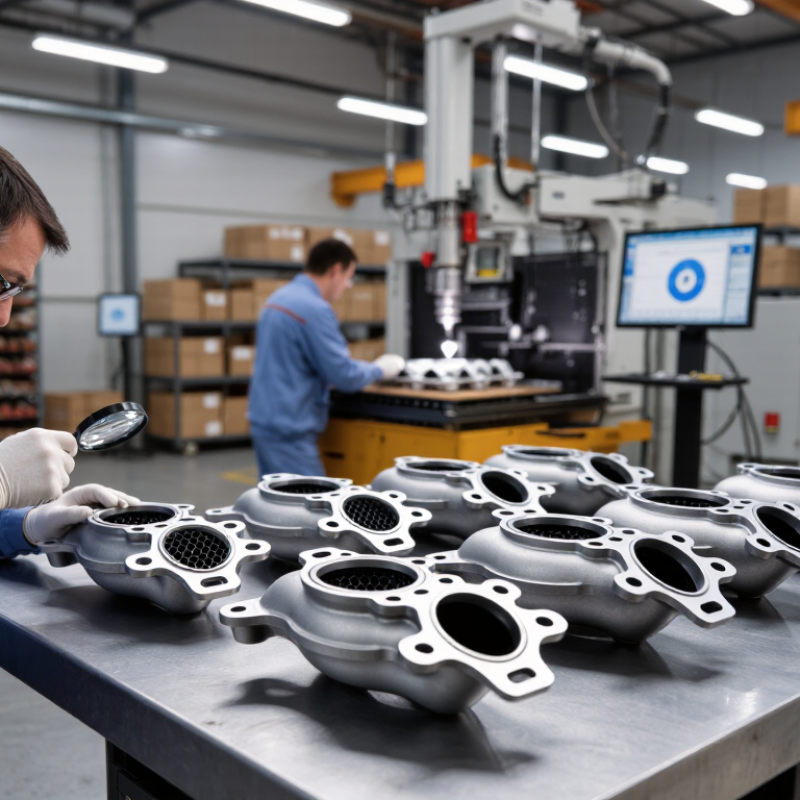
China Top Catalytic Converter Suppliers for Global Buyers

What Catalytic Converters Are and How They Work

A catalytic converter is an emissions-control device fitted in the exhaust line. It looks like a compact metal chamber, yet its interior is carefully engineered. Inside, a ceramic or metal honeycomb carries a thin coating of catalyst materials. Exhaust gas flows through thousands of narrow channels. Heat activates chemical reactions on those surfaces. Carbon monoxide becomes carbon dioxide, unburned hydrocarbons become carbon dioxide and water, while nitrogen oxides are reduced into nitrogen and oxygen.

The converter does not work well when it is cold. During a workshop inspection, technicians often check warm-up time, exhaust temperature, and sensor readings. An oxygen sensor measures gas before or after the converter, helping the engine control system adjust the air-fuel mixture. If the honeycomb is cracked, blocked, or contaminated, back pressure may rise. The vehicle can then lose power, use more fuel, or trigger a warning light. These signs are useful, but they do not identify the fault alone.

For global buyers comparing catalytic converter suppliers in China, technical details matter more than polished product photos. Ask for substrate dimensions, catalyst loading information, temperature ratings, test data, and traceable production records. Fitment must match the engine, exhaust layout, and sensor position. A converter that looks identical may perform differently. Looks can mislead. I once treated visual similarity as sufficient; that assumption was too simple. Reliable purchasing requires sample testing and clear quality checks. Performance depends on the whole system, not the metal shell.

China’s Catalytic Converter Supplier Landscape

China Top Catalytic Converter Suppliers for Global Buyers

China’s Catalytic Converter Supplier Landscape

China’s catalytic converter supplier landscape is broad, technical, and uneven. Production is concentrated across coastal manufacturing regions with strong metalworking and automotive supply chains. Some factories focus on ceramic substrates, while others specialize in stainless-steel shells, welding, or complete assemblies.

Experienced buyers usually inspect more than a product catalog. They review substrate cell density, precious-metal loading records, coating consistency, and shell thickness. Factory visits can reveal practical details, such as clean welding lines, organized batch storage, and traceable material labels. Small details matter.

Testing capacity separates serious suppliers from simple traders. Reliable facilities may provide thermal aging tests, leak checks, vibration testing, and emissions data for specific applications. Buyers should request sample reports and confirm whether testing was performed in-house or by an independent laboratory. Certification documents also require careful verification, especially when products target different markets.

The landscape still has weaknesses. Some suppliers communicate well but offer limited engineering support after sampling. Others provide attractive prices, yet their production records are incomplete. I have found that a perfect first sample does not always predict stable mass production. A pilot order, clear inspection points, and written specifications reduce that uncertainty.

Product selection should match engine type, installation space, operating temperature, and expected exhaust flow. Universal units may simplify purchasing, but they can create fitment or performance compromises. Long-term cooperation depends on honest technical discussion, consistent quality control, and realistic delivery planning.

Key Products, Materials, and Manufacturing Capabilities

China Top Catalytic Converter Suppliers for Global Buyers

China’s catalytic converter suppliers commonly produce ceramic honeycomb, metallic substrate, and diesel oxidation catalyst assemblies. Product selection depends on engine size, exhaust temperature, installation space, and emissions targets. Ceramic substrates often use cordierite for thermal stability and lower cost. Metallic substrates use stainless steel foil for faster heat transfer and compact designs. Some suppliers also manufacture particulate filters and selective catalytic reduction components for heavy-duty applications.

Reliable factories usually manage the complete process in-house. This may include substrate forming, catalyst coating, laser cutting, shell stamping, canning, welding, and leak testing. Automated coating lines help control washcoat thickness across each cell channel. Experienced technicians inspect weld seams, back pressure, dimensional tolerance, and coating adhesion. Batch records should identify raw materials, production dates, test results, and shipment quantities.

Ask for material certificates and performance data. Request thermal aging results when long service life matters. Factory audits can reveal more than a polished catalog. Check coating equipment, storage conditions, and sample traceability. A specification sheet may look complete but still omit pressure-drop data. That omission matters. No manufacturing line is perfect, and communication gaps can affect fitment or delivery. Clear drawings, approved samples, and staged inspections reduce these risks for global buyers.

China Top Catalytic Converter Suppliers for Global Buyers - Key Products, Materials, and Manufacturing Capabilities

Product Category Typical Substrate Common Housing Material Main Catalyst Coating Typical Applications Manufacturing Capabilities Buyer Verification Points
Three-Way Catalytic Converter Cordierite or metallic honeycomb Aluminized steel or stainless steel Platinum, palladium, and rhodium with washcoat Gasoline passenger cars, light commercial vehicles, and motorcycles Substrate coating, canning, matting, shell forming, robotic or manual welding, and leak testing Emission target, precious-metal loading, cell density, back pressure, light-off performance, and durability test data
Diesel Oxidation Catalyst Cordierite, silicon carbide, or metallic substrate Stainless steel, commonly heat-resistant grades Platinum and palladium formulations Diesel vehicles, generators, industrial engines, and construction equipment High-temperature coating, substrate drying, canning, thermal insulation, and flow testing Hydrocarbon and carbon-monoxide conversion, sulfur tolerance, thermal aging, and pressure-drop results
Diesel Particulate Filter Porous silicon carbide or cordierite wall-flow substrate Stainless steel or coated steel housing Optional oxidation catalyst coating, depending on system design On-road diesel vehicles, off-road machinery, and stationary engines Wall-flow assembly, canning, insulation installation, pressure testing, and ash-loading evaluation Filtration efficiency, regeneration temperature, ash capacity, thermal-shock resistance, and exhaust back pressure
Selective Catalytic Reduction Catalyst Ceramic honeycomb or plate-type substrate Heat-resistant stainless steel or fabricated alloy housing Vanadium-tungsten-titanium or copper/zeolite formulations Heavy-duty trucks, buses, marine engines, power generation, and industrial boilers Catalyst module production, housing fabrication, sealing, modular assembly, and ammonia-slip testing NOx conversion range, ammonia slip, sulfur resistance, operating temperature window, and compliance test method
Gasoline Particulate Filter Ceramic wall-flow substrate, commonly cordierite or silicon carbide Stainless steel or aluminized steel Three-way catalyst coating combined with particulate filtration Direct-injection gasoline vehicles Wall-flow substrate coating, canning, thermal insulation, welding, and particulate-number testing Particulate-number reduction, three-way conversion, regeneration behavior, pressure drop, and thermal durability
Small-Engine and Motorcycle Converter Compact ceramic or metallic honeycomb Stainless steel, often with a heat shield Platinum, palladium, rhodium, or oxidation-focused formulations Motorcycles, scooters, lawn equipment, portable generators, and small gasoline engines Compact forming, precision welding, heat-shield fabrication, coating, and batch production Package size, vibration resistance, exhaust temperature, emission certification, and installation orientation
Universal-Fit Replacement Converter Ceramic or metallic honeycomb selected by emission class Aluminized steel or stainless steel Emission-specific precious-metal washcoat Aftermarket repair, fleet maintenance, and general replacement programs Standardized diameter production, inlet/outlet customization, fixture welding, and packaging for export Applicable vehicle class, legal replacement status, dimensions, oxygen-sensor ports, heat shielding, and test certification
Custom OEM-Style Converter Assembly Cordierite, silicon carbide, metallic, or application-specific substrate Stamped or hydroformed stainless-steel housing Catalyst chemistry engineered for the target engine and emission standard Passenger vehicles, commercial vehicles, industrial engines, and specialty machinery CAD development, tooling, stamping, hydroforming, automated welding, coating, prototyping, and end-of-line inspection Drawing control, sample approval, dimensional capability, emissions validation, traceability, and production consistency
General sourcing note: Actual catalyst formulation, precious-metal loading, substrate specification, emission performance, and certification depend on the engine, exhaust system, target market, and applicable regulations. Buyers should request current technical datasheets, test reports, material declarations, and traceability documentation before placing production orders.

How to Evaluate Chinese Suppliers and Product Quality

Choosing a Chinese catalytic converter supplier requires more than comparing online prices. Review the factory’s production experience, engineering team, and export records. Ask for a current business license and relevant quality certificates. These documents do not prove everything. Visit the facility, or arrange a live video inspection.

Product quality should be checked with measurable evidence. Request drawings showing shell dimensions, inlet size, outlet size, and substrate specifications. Ask for material certificates and batch traceability records. A reliable supplier should explain coating methods, cell density, and precious-metal loading without hiding behind vague terms. Independent emissions testing is valuable. Confirm that the test method matches your target market’s requirements. Inspect welds, flanges, brackets, and heat shields closely. Small cracks can become expensive failures.

Communication also reveals supplier reliability. Send the same technical questions to several companies and compare their answers. Check whether the quotation clearly separates tooling, testing, packaging, and delivery costs. A sample should be tested after thermal cycling, not only inspected when new. This step is often overlooked. I have learned that a polished sample can create false confidence when production controls remain weak. Some suppliers may also promise shorter lead times than their equipment can support. Ask for production photos, inspection checkpoints, and a realistic schedule. Keep written records of every specification before placing an order. Rethink assumptions. Verify twice.

Global Purchasing, Compliance, Shipping, and After-Sales Support

China Top Catalytic Converter Suppliers for Global Buyers

Global purchasing starts with clear technical communication. Buyers should provide vehicle details, engine specifications, dimensions, and intended markets. Experienced suppliers can then confirm substrate type, precious-metal loading, casing size, and temperature resistance. Request current test reports and batch records before placing a large order. Specifications matter more than attractive quotations.

Compliance varies by country and vehicle application. A supplier should provide material declarations, origin documents, packing lists, commercial invoices, and relevant emissions evidence. However, no supplier can promise universal approval. Local authorities may require additional testing or certification. Buyers should verify requirements with qualified customs and regulatory professionals. This step is often delayed, and that mistake can create expensive storage charges.

Shipping plans need practical detail. Strong export teams use moisture-resistant packaging, clear labels, pallet protection, and shipment photographs. Confirm the Incoterm, delivery schedule, insurance responsibility, and HS classification in writing. Tracking updates should continue after departure. After-sales support is equally important. A reliable supplier keeps production records and responds with technical evidence, not vague promises. Warranty terms should cover inspection procedures, reporting deadlines, and reasonable remedies. Installation guidance can prevent avoidable damage. Still, buyers should inspect each shipment promptly. We have seen small packaging issues become larger claims when evidence was missing. Better processes reduce that risk, but they do not remove it entirely.

FAQS

What is a catalytic converter?

It is an emissions-control device installed in the exhaust system. A metal shell protects a ceramic or metallic honeycomb inside.

How does a catalytic converter reduce harmful emissions?

Exhaust gases pass through narrow honeycomb channels. Heat activates catalyst surfaces, changing carbon monoxide, hydrocarbons, and nitrogen oxides into less harmful gases.

Why does the converter need heat?

Chemical reactions work poorly when the converter is cold. Technicians check warm-up time and exhaust temperature during inspections.

What symptoms may indicate a converter problem?

A blocked or damaged honeycomb can increase back pressure. The vehicle may lose power, consume more fuel, or show a warning light.

Can these symptoms identify the exact fault?

No. Similar symptoms can come from sensors, fuel systems, or other exhaust parts. Diagnosis needs measured evidence.

Which materials are commonly used inside converters?

Ceramic substrates often use cordierite for thermal stability and lower cost. Metallic substrates use stainless steel foil for faster heat transfer.

What information should buyers request from a supplier?

Request substrate dimensions, cell density, catalyst loading, temperature ratings, test data, and production records. Ask for material certificates, too.

How can buyers check supplier quality before ordering?

Review drawings, batch records, welds, flanges, brackets, and heat shields. Arrange a factory visit or live video inspection when possible.

Why should samples undergo thermal cycling?

A new sample may look perfect but fail after repeated heating. Thermal cycling can reveal cracks, weak welds, or poor coating adhesion.

What purchasing mistakes should global buyers avoid?

Do not rely on product photos or the lowest quotation. Fitment depends on engine details, exhaust layout, and sensor position. Looks can mislead.

Conclusion

Catalytic Converters are essential vehicle components designed to reduce harmful emissions by converting pollutants in exhaust gases into less harmful substances. This article provides an overview of China’s catalytic converter supplier landscape, covering the main product types, substrate materials, coating technologies, and manufacturing capabilities available to international buyers. It also explains how factors such as production consistency, testing procedures, material quality, certifications, and customization options can help buyers assess supplier reliability and product performance.

For global purchasing, the article highlights practical considerations including supplier communication, documentation, compliance with destination-market requirements, packaging, shipping arrangements, lead times, and after-sales support. By comparing technical specifications, quality-control systems, production capacity, and service responsiveness, buyers can make more informed sourcing decisions and establish dependable long-term supply relationships.

Oliver

Oliver

Oliver is a dedicated marketing professional with a deep expertise in our company’s products and services. With a passion for sharing knowledge, he frequently updates our professional blog, providing insights and in-depth analyses that highlight the unique features and advantages of our offerings.......