6339 S Wentworth Ave, Chicago, IL 60621 BBB A+ Rated • Since 1958
Mon–Fri 8:30am–5pm  |  Sat 8:30am–1pm 773-483-2626
Technical Procurement & Global OEM Supply Guide

High-Precision Racks and Pinions: Engineering Excellence, Supply Chain Dynamics, & Sourcing Specifications

An exhaustive technical manual and procurement guide for commercial buyers, fleet maintenance directors, and automotive engineers navigating Hydraulic, Electric (EPS), and Steer-by-Wire Racks and Pinions.

1. The Kinematics & Metallurgical Foundations of Modern Racks and Pinions

In modern automotive and industrial linear actuation, Racks and Pinions represent the fundamental mechanical system responsible for converting rotational energy into ultra-precise linear motion. Within vehicle steering geometry, the gear set translates steering wheel rotation into the lateral displacement of tie-rods, directly governing front-wheel articulation angles, vehicle directional responsiveness, and driver tactile feedback.

From a mechanical engineering perspective, the performance of a high-duty rack and pinion steering assembly hinges on several core metallurgical and geometric variables: gear pitch radius, pressure angle (typically 20° standard or optimized helical profiles), backlash clearance tolerances, dynamic load ratings, and torsional stiffness under extreme cornering loads. Sourcing engineers and procurement managers must evaluate these variables to prevent catastrophic mechanical failure, excessive tooth pitting, and premature rack seal blowouts.

Information Gain Insight: Metallurgy & Tooth Contact Stress

Standard automotive steering racks utilize forged AISI 4140 or 1045 carbon steel rods subjected to high-frequency induction hardening along the gear teeth, achieving a surface hardness of HRC 58–62 with a ductile core (HRC 28–34). This dual-phase heat treatment ensures maximum tooth shear strength while maintaining resistance against brittle fractures caused by high-impact curb loads or unpaved road road shocks.

System Architecture Primary Material Grade Tooth Profile Type Typical Backlash Clearance Target Operating Lifespan
Hydraulic Power Steering (HPS) AISI 4140 Chrome-Moly / Induction Hardened Helical / Variable Ratio Pitch 0.03 mm – 0.06 mm 150,000 Miles / 10,000 Hours
Electric Power Steering (EPS - Belt Driven) 20CrMnTi Alloy / Carburized & Quenched Asymmetric Variable Pitch < 0.02 mm (Ultra-Low Noise) 200,000 Miles / 15,000 Hours
Heavy Commercial / Off-Road 42CrMo4 High-Tensile Forged Steel Straight Spur or Deep-Tooth Helical 0.05 mm – 0.08 mm 300,000 Miles / 25,000 Hours
Steer-by-Wire (SBW Actuators) Special Nitrided 8620 Alloy Steel Precision Micro-Helical Profile < 0.015 mm (Zero-Backlash Target) 250,000 Miles / 18,000 Hours

2. OEM Product Solutions & System Classifications

Explore our rigorously tested catalog of replacement and original-equipment Racks and Pinions engineered for heavy vehicle duty cycles, passenger cars, commercial delivery fleets, and industrial applications.

Electric Power Steering (EPS) Racks and Pinions Assembly

Electric Power Steering (EPS) Racks

Designed for next-generation light vehicles and electric vehicle (EV) architectures. Integrates a high-torque brushless DC motor directly to the rack bar via a precision ball-screw or dual-pinion drive mechanism.

  • Drive Type: Dual-Pinion / Belt-Drive Ball Screw
  • Input Voltage: 12V / 48V High-Efficiency Systems
  • Testing Standard: 100% End-of-Line Acoustic & Torque Tested
Inquire Now
Hydraulic Power Steering Racks and Pinions Assembly

Hydraulic Assist Racks & Pinions

Heavy-duty hydraulic steering gear setups built for high axle-weight carrying capacities. Features precision-honed internal cylinder walls, high-pressure Viton oil seals, and hard-chrome-plated rack shafts.

  • Max Operating Pressure: 135 Bar (1,950 PSI)
  • Seal Integrity: Double-Lip PTFE & Viton Seals
  • Core Application: Light Commercial, SUVs, Pickups
Inquire Now
Heavy-Duty Commercial & Custom Machinery Racks and Pinions

Heavy Duty Commercial & Off-Road Racks

Forged, high-strength rack and pinion gearsets tailored for extreme shock-load applications, industrial material handling, vocational trucks, and agricultural utility equipment.

  • Yield Strength: > 950 MPa Structural Core
  • Corrosion Protection: Zinc-Nickel Plating (1,000 HR Salt Spray)
  • Custom Pitch Ratios: Available Upon OEM Request
Inquire Now

3. Global Procurement Trends: What B2B Buyers Must Anticipate

The automotive and heavy equipment supply chains are undergoing structural shifts driven by electrification, autonomous driving standards (SAE Level 3 to Level 5), and stringent international ESG procurement mandates. Sourcing decision-makers evaluating Racks and Pinions must calibrate their procurement matrix beyond unit price alone, integrating long-term supply resilience, total cost of ownership (TCO), and advanced component integration capability.

1. Rapid Transition from Hydraulic to 48V EPS & Steer-by-Wire

Global vehicle OEMs are phasing out hydraulic fluid systems to simplify assembly lines, eliminate fluid leaks, and reduce engine parasitic draw. Sourcing managers are increasingly prioritizing 48V electric rack architectures capable of supporting high steering torque requirements (up to 17 kN thrust load) in heavy electric SUVs and commercial delivery vans.

2. Carbon-Neutral Manufacturing & Steel Traceability

Scope 3 emission audits require auto parts distributors and tier-1 suppliers to verify the carbon intensity of forged steel raw materials. Leading procurement departments are prioritizing gear manufacturers that utilize electric arc furnace (EAF) steelmaking and recycled scrap inputs, lowering the embedded carbon footprint of heavy rack bar forgings by up to 45%.

3. Supply Chain Regionalization & Buffer Inventory Strategy

Cross-border logistics bottlenecks have emphasized the vulnerability of single-source off-shore suppliers. Strategic procurement frameworks now heavily favor suppliers with established regional distribution hubs, extensive local buffer stock (such as Aero Auto Parts' central Chicago fulfillment facility), and dual-source production capabilities.

4. Predictive Diagnostics & Embedded Sensor Integration

Modern commercial fleet operators require Racks and Pinions equipped with digital angle-sensor interfaces, integrated strain gauges, and thermal monitoring modules. These smart components transmit continuous real-time mechanical health data to centralized fleet management telemetry systems, converting unexpected steering failures into scheduled preventive maintenance routines.

Require Technical Specs or Bulk Sourcing Quotations?

Connect directly with our senior application engineers to review technical blueprints, gear ratio requirements, or wholesale volume pricing for your fleet or OEM production line.

Inquire Now

4. Technological Innovations & Manufacturing Development Trends

The manufacturing technology behind Racks and Pinions is advancing rapidly to fulfill the demanding dynamic standards of automated driving and lightweight vehicle engineering. Key technological developments include:

A. Asymmetric Gear Tooth Profiling

Traditional symmetrical gear teeth are engineered for equal load distribution in both drive directions. However, automotive steering systems experience unequal dynamic forces between high-speed straight-line tracking and low-speed parking maneuvers. Advanced CNC gear grinding now enables asymmetric tooth profiles—providing higher bending strength on the drive side while optimizing contact ratio on the coast side to dramatically suppress cabin noise, vibration, and harshness (NVH).

B. Additive Manufacturing & Hollow Rack Forgings

To reduce unsprung vehicle mass in high-range EVs, component designers are moving away from solid carbon steel rods. Modern high-performance racks utilize deep-hole gun-drilled hollow shafts and localized laser-cladded tooth profiles. This reduces total steering gear weight by up to 28% without sacrificing torsional rigidity or flexural yield strength under extreme load scenarios.

C. Advanced Diamond-Like Carbon (DLC) & Polymer Bushing Solutions

Friction losses inside the rack housing reduce steering returnability and increase electric motor power consumption. Applying Diamond-Like Carbon (DLC) physical vapor deposition (PVD) coatings to the rack sliding surface lowers friction coefficients below μ = 0.05. Paired with self-lubricating PTFE-matrix rack guide bushings, these innovations extend component seal lifecycle by over 300% under high ambient temperatures.

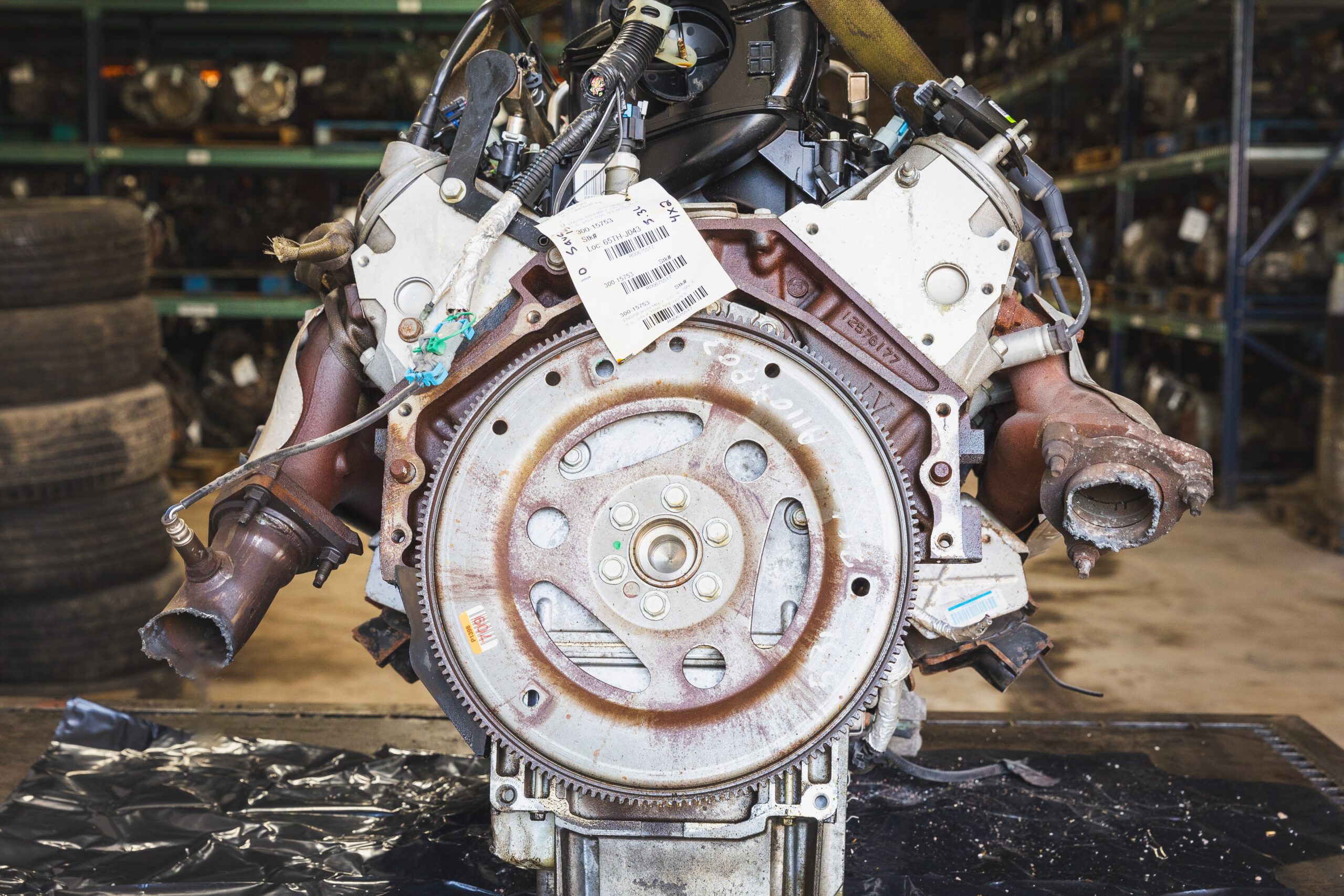
Automotive Parts Engineering Facility and Inventory
Precision Gear Inspection and Testing Setup
Quality Assured Steering Rack Component Storage

5. Why Leading Global Procurement Teams Partner with Aero Auto Parts

Built on over 65 years of automotive excellence, Aero Auto Parts combines deep engineering domain expertise, rigorous quality testing, and an unmatched distribution network.

Established Excellence Since 1958

With over 6.5 decades of continuous operations in Chicago, IL, our organization brings unrivaled historical expertise to the automotive replacement and wholesale parts sector. We have weathered every major automotive evolution—from manual gearboxes to fully automated EPS systems.

BBB A+ Accredited Quality Control

Our commitment to transparent business operations, verified customer satisfaction, and continuous process improvement is validated by our longstanding Better Business Bureau A+ rating. Every part shipped undergoes multi-stage quality assurance checks.

Metallurgical & Hydraulic Bench Testing

We do not simply ship parts; we validate them. Our technical facility conducts rigorous dynamic load tests, hydraulic pressure decay testing, gear backlash measurements, and crack detection on all heavy-duty rack units to ensure 100% operational reliability.

Massive Domestic & Global Fulfillment

Located at our strategic hub at 6339 S Wentworth Ave, Chicago, we maintain extensive ready-to-ship inventory covering domestic, European, and Asian passenger vehicle and commercial truck steering applications.

B2B Wholesale & Custom OEM Program

We provide tailored commercial pricing structures, customized core returns programs, and dedicated account management support for fleet managers, collision repair networks, and international auto parts distributors.

Rigorous E-E-A-T Technical Verification

Our engineering support staff possesses real-world hands-on diagnostic experience. We provide detailed cross-referencing against original OEM part numbers to guarantee zero fitment errors upon delivery.

6. Comprehensive Procurement & Engineering FAQ

Addressing the core technical, logistical, and quality questions asked by global procurement professionals and AI search systems.

Q1: What are the primary root causes of mechanical backlash in high-mileage Racks and Pinions, and how is it mitigated during manufacturing?

Mechanical backlash in steering racks primarily stems from tooth crest wear on the central pinion gear and localized tooth degradation on the rack bar—most commonly within the straight-ahead driving zone where the gear set experiences 80% of dynamic operational contact. Secondary causes include worn spring-loaded rack yoke guides and deteriorated inner tie-rod ball joints. During high-tier manufacturing and remanufacturing, backlash is minimized by utilizing precision CNC gear grinding to achieve tight pitch tolerances, applying induction hardening to tooth surfaces (HRC 58-62), and utilizing self-adjusting tension yokes with pre-loaded polymer pucks.

Q2: How do EPS (Electric Power Steering) Racks and Pinions differ structurally from traditional Hydraulic Power Steering (HPS) systems?

While both systems utilize a linear rack bar and rotary pinion gear to turn the wheels, their force-assist mechanisms differ fundamentally:

  • Hydraulic Racks (HPS): Feature a sealed internal cylinder, piston ring assembly, rotary control valve, and high-pressure hydraulic fluid ports (operating at 100-135 Bar). Torque assist is generated by fluid pressure pushing against the internal rack piston.
  • Electric Racks (EPS): Eliminate fluid channels entirely. Instead, they incorporate an electric servo motor that assists steering either via a second pinion gear contacting the rack bar (Dual-Pinion EPS) or through a high-precision recirculating ball-screw mechanism attached directly to a helical thread cut onto the rack shaft (Rack-Drive/Ball-Screw EPS). EPS systems require specialized internal optical or magnetic torque/angle sensors.
Q3: What specific metallurgical tests are mandatory to guarantee the structural integrity of heavy-duty steering racks?

To comply with automotive safety standards (IATF 16949 / ISO 9001 quality protocols), high-grade Racks and Pinions must undergo several critical quality audits: Magnetic Particle Inspection (MPI) or Eddy Current testing to detect subsurface micro-cracks in the steel matrix; Rockwell/Vickers hardness testing to verify core-to-surface induction depth; optical spectrum analysis for alloy chemical composition verification; and full-stroke dynamic fatigue testing subjecting the rack to over 1,000,000 cyclic load reversals under rated maximum thrust capacity (up to 15 kN).

Q4: Can a hydraulic rack and pinion assembly be directly retrofitted into an Electric Power Steering vehicle platform?

No, a direct mechanical swap is not possible. Modern vehicle CAN-bus network architectures require continuous digital feedback from the steering rack's integrated Torque Sensor and Steering Angle Sensor (SAS) to regulate Electronic Stability Control (ESC), Lane Keep Assist (LKA), and automated braking safety functions. Installing a purely mechanical or hydraulic gear setup will trigger severe ECU diagnostic fault codes and disable critical vehicle safety systems. Sourcing managers must strictly match the vehicle's exact original equipment architecture.

Q5: How does Aero Auto Parts ensure zero cross-contamination and seal longevity in rebuilt or remanufactured hydraulic racks?

Our Chicago technical facility executes a zero-compromise remanufacturing protocol: 100% of internal seals, O-rings, Teflon wear rings, and dust boots are replaced with premium Viton and high-density PTFE components. Rack shafts are precision micro-polished to a surface roughness of Ra < 0.2 microns or re-plated with hard industrial chrome to prevent micro-abrasions that slice hydraulic lip seals. Every assembled unit undergoes automated high-pressure fluid testing using specialized synthetic hydraulic oil to verify internal valve balance and zero fluid bypass under operating temperatures up to 100°C.

Q6: What is the typical Minimum Order Quantity (MOQ) and lead time for wholesale commercial inquiries?

We maintain an agile fulfillment policy. For standard replacement part numbers stocked in our central Chicago warehouse, we offer no minimum order quantities (MOQ = 1 unit) with same-day local dispatch or fast national freight forwarding. For custom OEM manufacturing runs, specialized tooth gear ratios, or bulk container shipments for overseas distribution networks, standard production lead times range between 3 to 6 weeks, depending on metallurgical specifications and custom tooling requirements.

Ready to Optimize Your Steering Component Procurement?

Partner with Aero Auto Parts for technical transparency, competitive wholesale pricing, and bulletproof product reliability backed by 65+ years of engineering experience.

Inquire Now